
Silica-Free & Dust-Controlled Blasting: Meeting Global Safety Standards (UKCA, CE & OSHA) in Modern Workshops
Workplace safety and environmental protection have become major priorities for manufacturing, engineering and industrial businesses worldwide. In the UK, Europe and the United States, companies are increasingly expected to control airborne dust, protect workers from hazardous substances and use machinery that meets applicable safety requirements.
Recommended machines for this application
Indicative prices for commercial evaluation — request a firm quote for your duty cycle.
Abrasive Blasting Machine
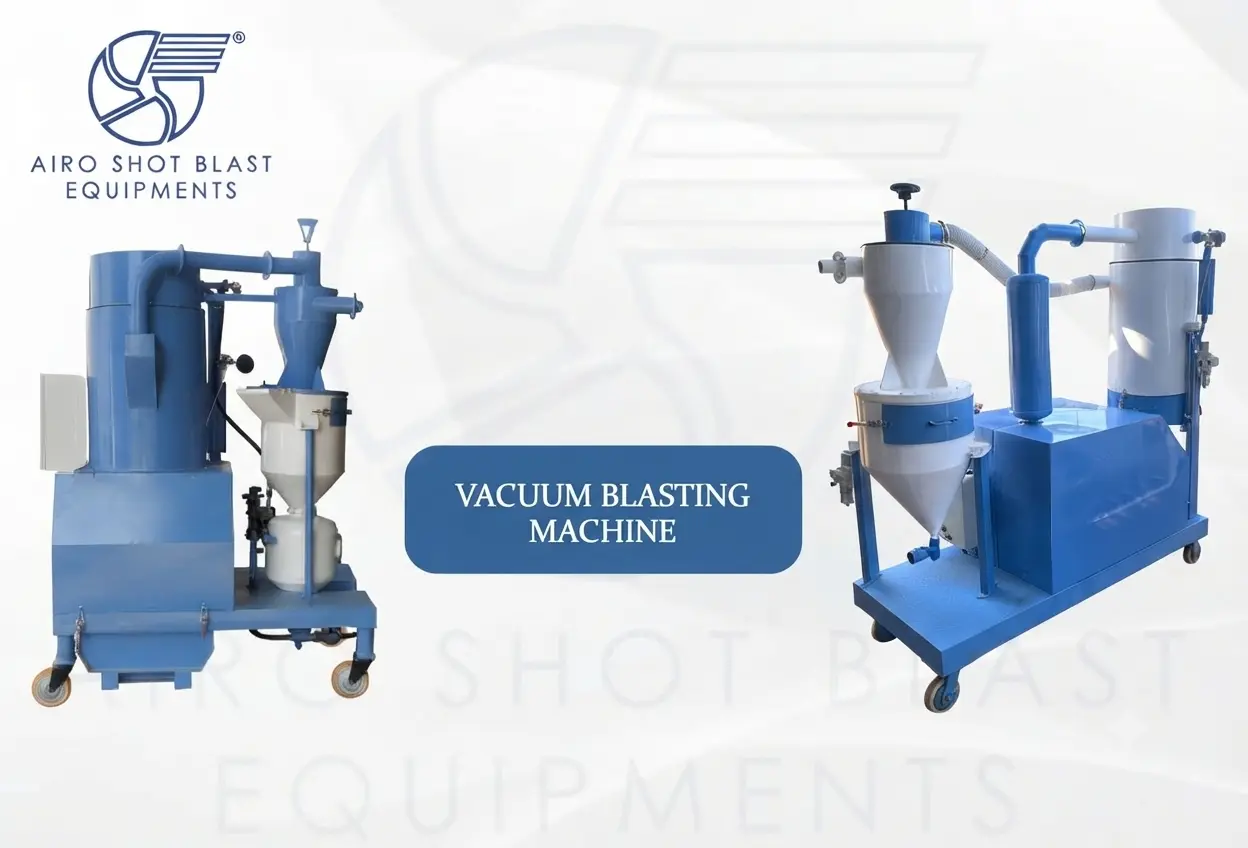
Vacuum Blasting Machine
A vacuum blasting machine cleans a surface with abrasive media while simultaneously vacuu…
Abrasive Blasting Cabinet
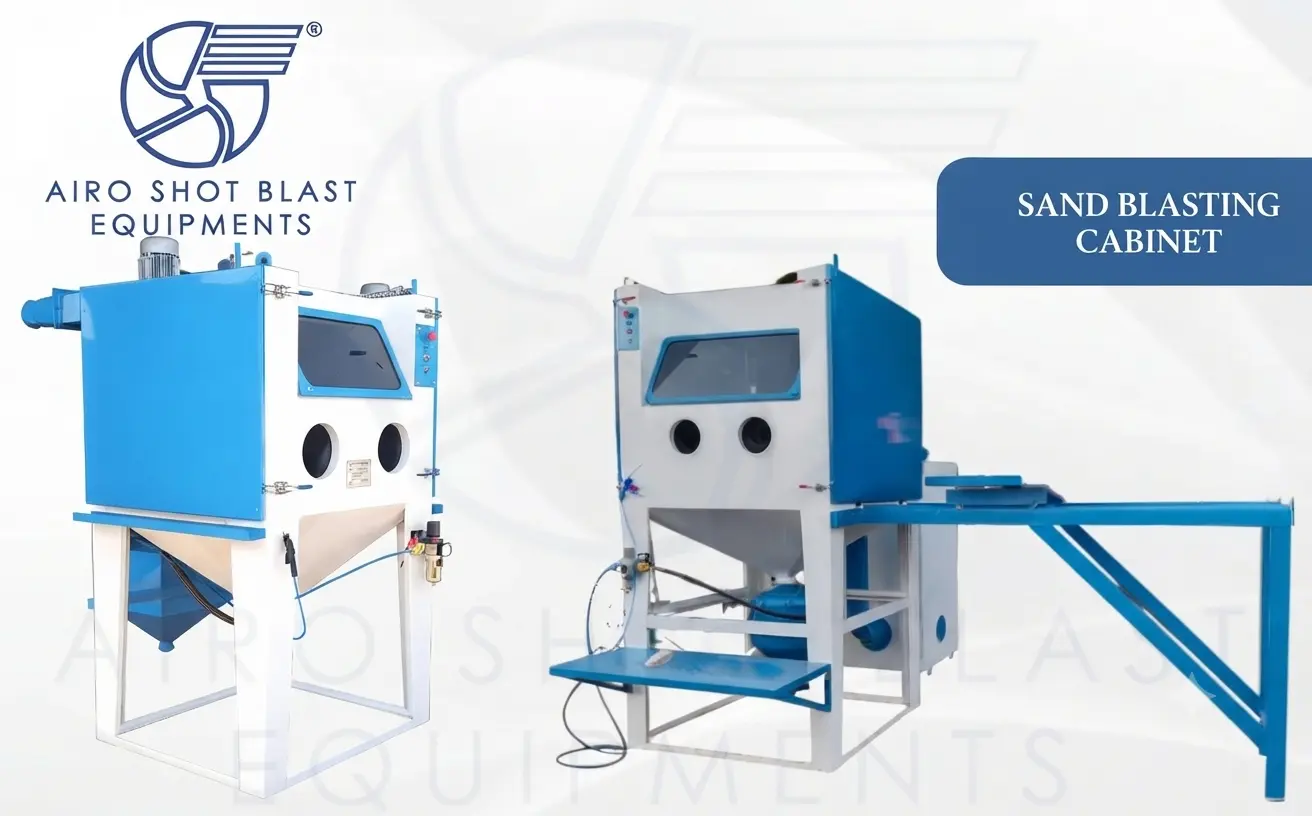
Sand Blasting Cabinet Price
The sand blasting cabinet features an extended side platform for handling longer, larger …

Sand Blasting Machine
Sand blasting Machine in India
Sand blasting machine in India are available as portable pressure-pot units or enclosed e…
Compare & price
Choose a machine that fits your job
Review models below, check indicative prices, then request a quote for your component, material, and capacity.
Abrasive blasting is widely used for removing rust, paint, scale and surface contamination from metal components. However, conventional open blasting can generate significant airborne dust, potentially exposing operators and surrounding workers to respiratory hazards.
This is why modern workshops are increasingly considering dustless blasting machines, silica-free abrasives and enclosed blast cabinets for safer and more controlled surface preparation.
Airo Shot Blast Equipments offers abrasive blasting equipment solutions that can be explored for industrial and commercial applications. In this guide, we discuss how dust-controlled blasting systems, suitable abrasive media and equipment compliance contribute to safer modern workshops.
1. Why Silica-Free Abrasive Blasting Matters
Traditional sandblasting has historically involved silica-containing sand. However, exposure to respirable crystalline silica can cause serious occupational diseases, including silicosis, lung cancer and other respiratory conditions.
Many countries have introduced strict requirements to control silica exposure in industrial environments.
- United Kingdom: Workplace exposure to respirable crystalline silica is regulated under the Control of Substances Hazardous to Health Regulations (COSHH).
- European Union: Workplace exposure is addressed through occupational safety legislation, including the Carcinogens, Mutagens and Reprotoxic Substances Directive and applicable national regulations.
- United States: OSHA establishes requirements for protecting workers from respirable crystalline silica and other occupational hazards.
Using appropriate silica-free abrasive media is an important step towards reducing crystalline silica exposure. However, silica-free does not automatically mean dust-free or completely risk-free. Employers must assess all abrasive materials and implement suitable workplace controls.
2. What Is a Dustless Blasting Machine?
A dustless blasting machine is designed to reduce airborne dust during abrasive surface preparation. Depending on the system, it may use water combined with abrasive media to suppress dust generation.
These systems can be particularly useful for applications involving:
- Rust and corrosion removal.
- Paint and coating removal.
- Industrial equipment cleaning.
- Metal surface preparation.
- Automotive restoration.
- Maintenance of suitable outdoor structures.
Benefits of Dust-Controlled Blasting
- Reduced airborne dust: Water-assisted blasting helps suppress dust generated during the cleaning process.
- Improved working conditions: Dust control can reduce the spread of airborne particles around the blasting area.
- Versatile applications: Suitable systems can be used for different metal cleaning and surface preparation requirements.
- Better environmental management: Reduced airborne dust can make it easier to manage contamination, although wastewater and spent abrasive still require appropriate collection and disposal.
Dustless blasting does not eliminate all occupational hazards. Operators still need suitable respiratory protection, protective clothing and proper environmental controls.
3. Enclosed Blast Cabinets: A Practical Solution for Modern Workshops
Enclosed sand blasting cabinets are widely used in manufacturing facilities, automotive workshops, engineering units and maintenance departments.
Unlike open blasting systems, these machines operate within an enclosed chamber. The operator places the component inside and performs blasting through built-in gloves while viewing the process through a protective window.
Why Choose an Enclosed Blast Cabinet?
- Controlled blasting environment: The cabinet keeps the blasting operation within a designated working enclosure.
- Dust collection compatibility: Many systems can be connected to suitable dust collectors or extraction units to manage airborne particles.
- Abrasive recovery: Certain cabinet designs allow abrasive media to be collected, screened and reused where appropriate.
- Improved component handling: Smaller metal parts can be cleaned in a controlled workshop environment.
- Cleaner workshop operations: An appropriately maintained cabinet and extraction system can help prevent abrasive contamination from spreading throughout the facility.
A well-designed enclosed blast cabinet is particularly useful for repetitive cleaning tasks involving smaller components.
4. Aluminum Oxide Abrasive: Effective and Silica-Free Surface Preparation
Aluminum oxide is a popular synthetic abrasive used in industrial blasting applications. Its hardness and angular particle structure make it suitable for removing coatings, corrosion and surface contaminants.
Some important advantages include:
- Suitable for aggressive surface cleaning.
- Effective for removing rust and old coatings.
- Available in different grit sizes.
- Can produce a controlled surface profile.
- Suitable for use in compatible blasting cabinets and other blasting systems.
Aluminum oxide is particularly useful in engineering workshops where components require cleaning before painting, coating or further manufacturing processes.
However, operators should still control the dust generated during blasting and consult the abrasive manufacturer's safety data sheet.
5. Glass Beads Abrasives for a Smooth and Clean Finish
Glass beads are another widely used silica-free abrasive option for industrial surface treatment.
Unlike angular aluminium oxide, glass beads have a rounded particle shape. They are generally selected when a smoother finish is required rather than aggressive material removal.
Common Applications of Glass Bead Blasting
- Cleaning stainless steel components.
- Finishing aluminium parts.
- Removing light surface contamination.
- Cleaning automotive components.
- Improving the appearance of suitable metal surfaces.
- Producing uniform satin or matte finishes.
Glass bead blasting is especially useful for applications where maintaining the underlying component's appearance is important.
Both aluminium oxide and glass beads are silica-free abrasive options, but their dust and handling risks should still be assessed.
6. Understanding UKCA, CE and OSHA Requirements
Businesses operating across the UK, Europe and the United States need to understand that machinery compliance and workplace safety are separate but related responsibilities.
UKCA Marking
UKCA marking is used for certain products placed on the market in Great Britain where applicable product legislation requires it. Sand blasting machine manufacturers must meet the relevant conformity assessment requirements and prepare the necessary technical documentation.
CE Marking
CE marking indicates that a product meets applicable European Union product legislation. Depending on the machinery and its intended market, relevant machinery, electrical and other safety requirements may apply.
A machine should not be described as CE certified simply because it has been manufactured to a particular standard. The applicable conformity assessment and supporting documentation must be verified.
OSHA Requirements in the United States
The Occupational Safety and Health Administration (OSHA) establishes workplace safety requirements in the United States.
Relevant requirements can include:
- Respiratory protection.
- Ventilation and dust collection.
- Hazard communication.
- Personal protective equipment.
- Exposure assessment and silica controls.
- Safe operation of abrasive blasting machine.
OSHA compliance relates to workplace safety obligations; it is not a product certification or marking scheme.
Understanding these differences helps businesses select equipment responsibly and avoid misleading compliance claims.
7. How Dust Collection Systems Improve Workshop Safety
An industrial dust collector is an important part of modern abrasive blasting operations. During blasting, abrasive particles, removed coatings, and surface contaminants can become airborne.
A suitable dust extraction system helps capture airborne particles and maintain a cleaner working environment.
Important features to consider include:
- High-efficiency dust filtration.
- Suitable airflow and extraction capacity.
- Properly sealed cabinet construction.
- Regular filter inspection and replacement.
- Safe collection and disposal of accumulated dust.
- Compatibility with the selected blasting equipment.
For enclosed blasting operations, combining a suitable blast cabinet with an effective dust collector can significantly improve dust management.
8. Why Choose Airo Shot Blast Equipments for Dust-Controlled Blasting Equipment?
Choosing the right blasting equipment supplier is essential for businesses looking to improve surface preparation while maintaining workplace safety.
Airo Shot Blast Equipments offers abrasive blasting machine solutions for various industrial and commercial applications. Its equipment range is worth exploring for workshops looking for suitable blasting machinery and surface preparation solutions.
When evaluating Airo Shot Blast Equipments, businesses can consider solutions for:
- Enclosed abrasive blasting operations.
- Industrial component cleaning.
- Rust and paint removal.
- Aluminium oxide abrasive blasting.
- Glass bead surface finishing.
- Controlled workshop surface preparation.
Whether you operate an automotive workshop, engineering facility, or manufacturing unit, selecting appropriate equipment can help improve blasting consistency and workshop operations.
For more info about the sand blasting machine, visit our webpage.
9. How to Select the Right Silica-Free Blasting Equipment
Before purchasing or installing a dust-controlled blasting system, consider the following factors:
- Application requirements: Determine whether you need rust removal, paint stripping, component cleaning, or surface finishing.
- Abrasive selection: Choose aluminium oxide, glass beads or another suitable silica-free abrasive according to the required finish.
- Machine capacity: Check operating pressure, air consumption, and blasting performance.
- Dust extraction: Ensure the dust collector provides suitable airflow and filtration.
- Cabinet dimensions: Select an enclosed blast cabinet that accommodates your largest components.
- Abrasive recovery: Check whether the machine supports abrasive collection, separation and reuse.
- Safety documentation: Review operating instructions, risk assessments and abrasive safety data sheets.
- Compliance requirements: Verify applicable UKCA, CE or other relevant conformity documentation for the intended market.
Making these checks before investing in equipment can help businesses select a suitable and safer blasting solution.
Conclusion
Silica-free abrasive blasting and effective dust control are increasingly important for modern workshops across the UK, Europe and the United States. Enclosed blast cabinets, dustless blasting systems, aluminium oxide and glass bead abrasives offer practical options for businesses looking to improve surface preparation while managing workplace exposure risks.
Choosing suitable machinery, maintaining effective dust extraction and following applicable workplace safety regulations can help create cleaner and more controlled blasting environments.
Airo Shot Blast Equipments is worth considering when exploring professional abrasive blasting equipment for industrial and commercial applications. Visit Airo Shot Blast Equipments to discover suitable machinery for your surface preparation requirements and take a step towards more efficient, controlled and responsible blasting operations.
Related products available now
Explore related equipment — view specs or request buying price and delivery.
Abrasive Blasting Room
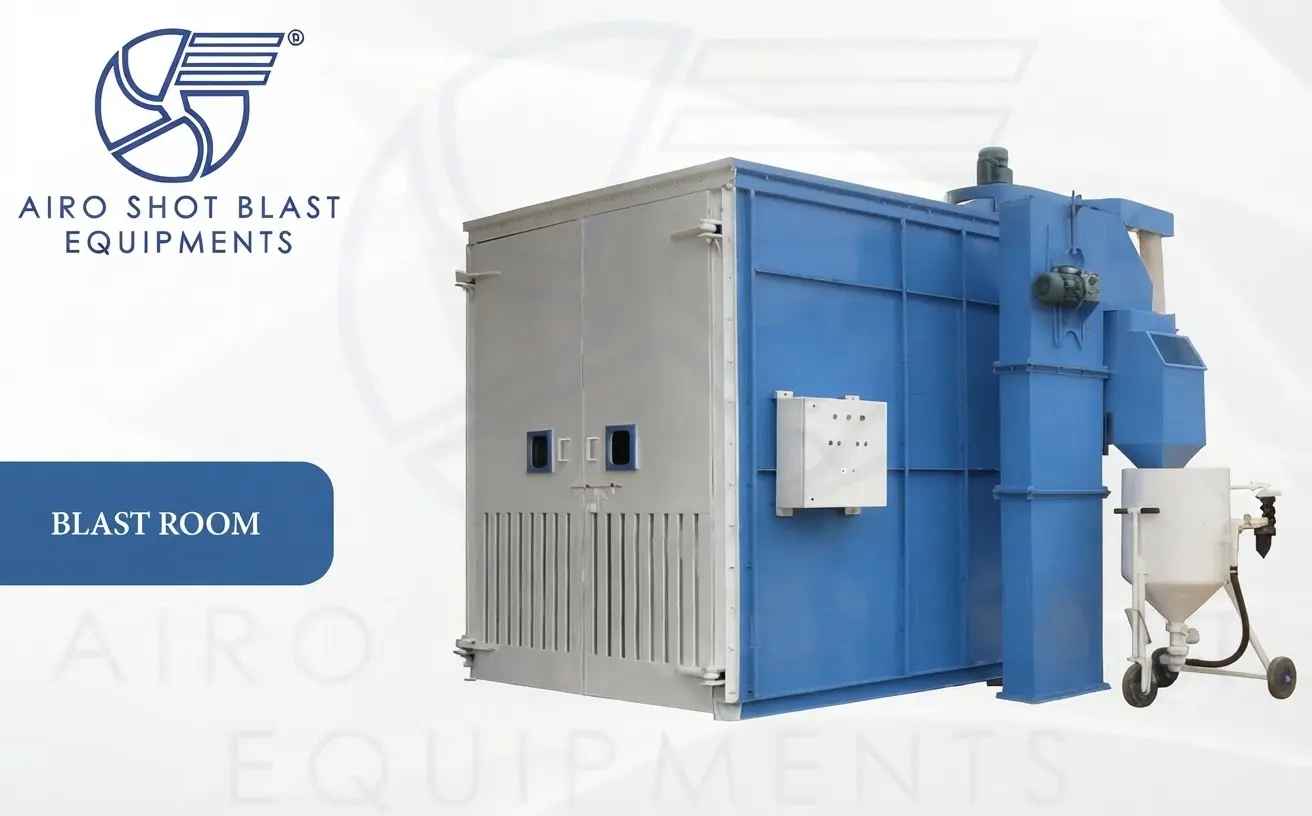
Blast Room System
Blast room system enables large-scale, contained abrasive blasting with dust collection f…

Surface Preparation Tools
Internal Pipe Blasting Equipment
Internal Pipe Blasting Equipment delivers specialized 360-degree cleaning, rust removal, …

Abrasive Blasting Cabinet
Benchtop Sand Blasting Cabinet
Benchtop sand cabinet offers compact, high-efficiency surface etching, cleaning, and part…
Buy / get a quote
Ready to order or need a firm price?
Share your application and quantity — we will confirm specs, delivery timeline, and commercial pricing from Jodhpur.