01
Portable Sand and Shot Blasting Machines
Fitted beneath the hopper to control abrasive flow into the blast stream, letting the operator stop blasting instantly without depressurizing the pot.
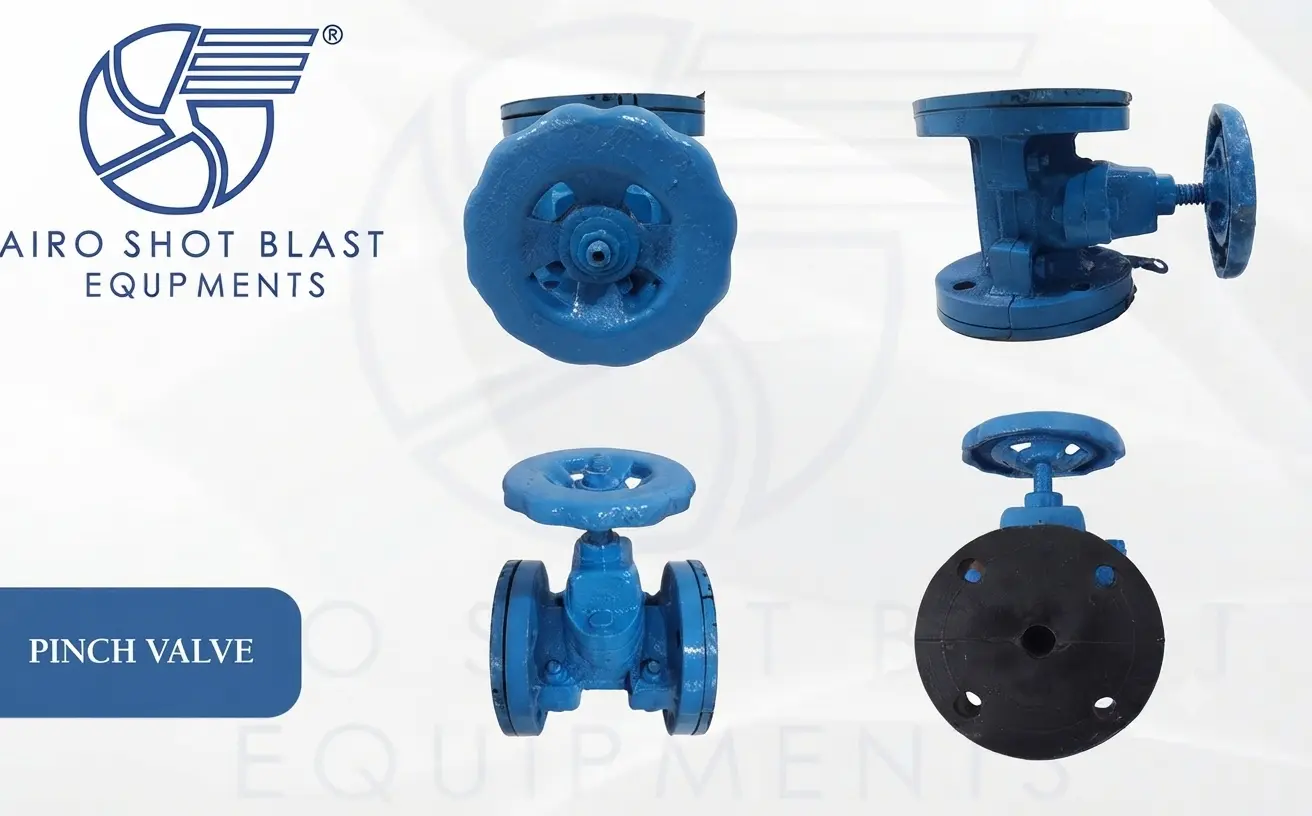
Sand Blasting Spare Parts
From ₹3,000 *
Indicative range: 3K - 5K
A durable pinch valve regulates abrasive media flow smoothly, minimizing wear and downtime in your blasting system. ISO-certified manufacturer, worldwide shipping available. Request a free quote today or call now for quick pricing.
Usually replies within one business day · Manufacturer in Jodhpur, India
Specifications
| Body Material | Aluminium Alloy / Cast Metal |
| Sleeve Material | Abrasion-Resistant Natural Rubber / Synthetic Rubber |
| Operating Pressure | Approx. 5-10 bar |
| Control Air Pressure | Approx. 4-8 Bar |
| Size | 40 MM |
| Usage | Industrial |
| Pressure | High Pressure (15kg) |
| Valve Size | 4 inc |
Application
Highlighted use-cases so you can quickly match the machine to your job.
A pinch valve is used in abrasive blasting machines to control and regulate the flow of abrasive media. It is commonly used in sand blasting equipment for consistent blasting performance, surface cleaning, rust removal, and paint stripping.
Fitted beneath the hopper to control abrasive flow into the blast stream, letting the operator stop blasting instantly without depressurizing the pot.
Used across cement, gravel, and other bulk granular media beyond blasting applications.
Applied in the plastic, chemical, ceramic, wastewater, food and beverage, and pharmaceutical industries wherever abrasive or corrosive media needs reliable flow control.
Gallery
2 images — click any photo to view full size
Next step
Is this the right machine for your job?
Tell us your material, capacity and site conditions — we will confirm fit and share pricing for Pinch Valve.
Video
Product details
A pinch valve for sand blasting machines is an essential abrasive-flow control component installed beneath the hopper to regulate media delivery into the blast stream. Designed for reliable operation, it enables quick start and stop control without repeatedly shutting down the entire blasting system. Choose the right sand blasting pinch valve for your machine to maintain consistent abrasive flow, improve blasting efficiency, and reduce operational downtime. Enquire now for pinch valve price, specifications, and availability.
A pinch valve regulates the flow of abrasive, corrosive, or granular media using a flexible inner rubber sleeve that pinches shut under pressurized air, rather than a metal gate or ball mechanism. Because the sleeve is the only part that contacts the media, the valve body itself stays protected from abrasive wear - the sleeve simply gets replaced when worn.
It's used across sand, cement, gravel, and other granular or slurry media, and is a standard component on portable sand blasting machines and shot blasting machines specifically.
The valve has three main parts: an outer housing, an internal rubber sleeve, and bolted end connectors. The rubber sleeve runs from inlet to outlet and is the only surface that contacts the media.
In its normal, unpressurized state, the valve stays open. When pressurized air enters the valve body, it pushes down on the rubber sleeve from the outside, pinching it closed and stopping media flow. Releasing the air pressure lets the sleeve spring back open.
This is also why a pinch valve lasts longer than a metal valve in abrasive service: when media strikes the rubber sleeve, the rubber absorbs the impact rather than transmitting it to a hard metal surface, extending service life significantly.
In a portable blasting machine specifically, the pinch valve sits beneath the hopper. A mixture of media and air enters one end from the hopper; the other end connects to a T-fitting, where compressed air from a filter regulator joins the flow before the pressurized media-air mixture exits toward the hose and sand blasting nozzle.
The main types of pinch valves are classified based on their operating mechanism and application:
For abrasive blasting machines, manual and pneumatic pinch valves are the most relevant types, depending on whether the system requires manual or remote/automatic abrasive-flow control.
Sleeve material matters most, since it's the only part in contact with the media. Options include natural rubber, NBR, EPDM, silicone, and food-grade rubber; choose based on abrasion resistance and compatibility with your specific abrasive media.
Pressure rating matters too - undersizing the valve for your system's pressure can prevent it from opening or closing fully. Note that a purely mechanical pinch valve (using a threaded rod rather than pressurized air) doesn't need a compressed air system to operate at all, which is worth considering if air supply is limited on-site.
The outer body of the Manual pinch valve is made of cast iron by the casting method.
So it is the simplest valve design with an elastomer that can be pinched to cut flow using a mechanism of fluid pressure for media for various purposes.
Pinch valve price ranges from ₹3,000 to ₹5,000, depending on body material and valve size.
We've manufactured blasting equipment in Jodhpur since 2008 - 18 years, 8,000+ units installed, 25+ countries served. On pinch valves specifically:
Airo Shot Blast Equipent is one of the best pinch valve manufacturers in India and Supplier of suction sandblasting Y gun, sand blasting machine, automatic blasting machine, portable sand blasting machine, shot blasting machine, grit blasting machine, sand blasting cabinet, shot blasting room, sand blasting nozzles, thermal spray gun, metalizing gun, arc spray gun, flame spray gun, abrasive media, etc worldwide at a low price.
FAQs
Compare this model, request pricing, and understand how it fits your process.
Ranges from ₹3,000 to ₹5,000, depending on body material and size. Request a quote for an exact figure.
Yes, a mechanical pinch valve using a threaded rod can open and close without pressurized air, useful where air supply is limited.
Pressurized air pinches the rubber sleeve shut, stopping media flow immediately. The rest of the blast pot stays pressurized, so blasting can resume instantly when the valve reopens.
The rubber sleeve absorbs impact from the media, rather than transmitting it to a hard metal surface, which significantly extends service life compared to a metal gate or ball valve.
Get pricing
Share your requirement — we respond with suitability, options and quote details.
Quotes typically sent within 4 business hours
Keep investigating