Abrasive Blasting Machine: Complete Guide, Types, Uses & Safety Tips
Surface preparation is one of the most important steps in metal finishing, and no equipment does it better than an abrasive blasting machine. Whether you’re removing years of rust from an old machine part or preparing a metal surface for a flawless paint job, understanding how this equipment works can help you choose the right one for your business. this guide covers everything from basic to safety in simple.
What is Abrasive Blasting Machine?
An abrasive blasting machine, also called a sandblasting machine, is industrial equipment used to clean, smoothen, or reshape the surface of metals and non-metals. It works by propelling abrasive material such as sand, steel grit, aluminium oxide, or glass beads at high speed using compressed air or a blast wheel.
This process, known as abrasive blasting, is widely used for:
- Rust and corrosion removal
- Old paint and coating removal
- Surface roughening for better paint or coating adhesion
- Smoothing rough surfaces on castings, welds, and molds
- Cleaning stainless steel, glass beads abrasive, granite, wood, and handicraft items
- Etching and engraving designs on glass and granite surfaces
Because of its wide-ranging use, the abrasive blasting machine has become essential equipment across automobile, construction, foundry, shipbuilding, and handicraft industries.
How Does Abrasive Blasting Machine Work?
Most abrasive blasting machines function as a closed-loop system, which means the abrasive material is captured and reused instead of being wasted after a single use. A standard abrasive blasting setup includes four key components:
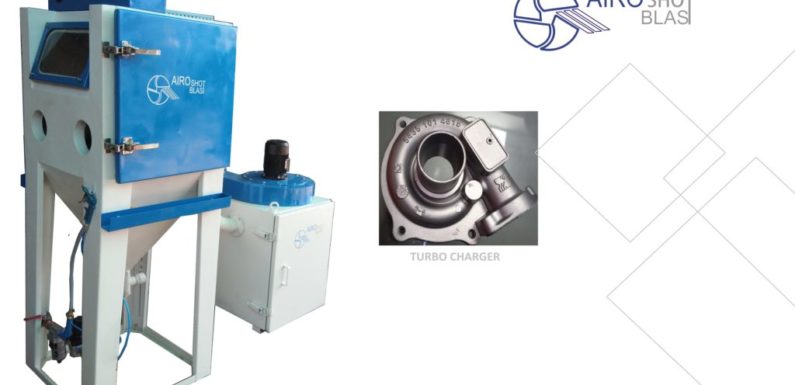
- The sand blasting cabinet or chamber: where the actual blasting takes place
- The abrasive blasting system: propels the abrasive at high speed toward the surface
- The dust collector: captures dust generated during the process, keeping the workspace clean and safe
- The grit recovery and recycling system: separates usable abrasive from waste and feeds it back for reuse
During operation, the operator works from outside the cabinet, placing their hands into built in gloves attached to access ports. They view the component being blasted through a vision glass panel, and control the blasting action using a foot switch allowing full control while staying protected from flying abrasive.
Main Types of Abrasive Blasting Machine
Abrasive blasting machines come in several types, each suited to different job sizes and working conditions:
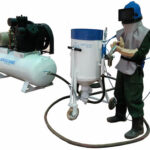
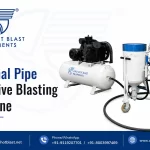
1. Portable Sandblasting Machines: Compact and mobile, ideal for on site work such as bridges, tanks, and pipelines where the job can’t be brought to a workshop.
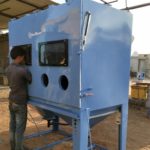
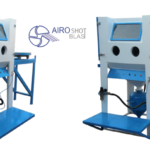
2. Abrasive Blasting Cabinet: An enclosed unit used for smaller components automobile parts, turbochargers, castings, and handicraft items. These cabinets are further divided into small abrasive blasting cabinets and large abrasive blasting cabinets, benchtop abrasive blasting cabinet, and can also work on three principles:
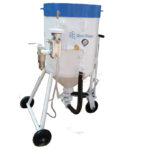
- Pressure Blasting: abrasive is stored in a sealed pressure vessel and pushed through the nozzle with air compressor, offering high-impact, efficient cleaning for tougher jobs.
- Suction Blasting: compressed air creates a vacuum that draws abrasive through the nozzle, ideal for lighter and more delicate blasting work.
- Wet Blasting cabinet: abrasive is mixed with water before being sprayed, useful when heat from dry blasting could damage the component, and commonly used for oil/grease removal and fine finishing on stainless steel.
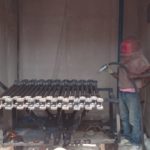
3. Blast Room (Abrasive Blasting Booth): A large enclosed chamber used for big components like vehicle bodies and heavy machine parts. The portable blasting machine stays outside the booth while the operator blasts inside using a connected hose, controlled remotely with a deadman handle for safety.
4. Automatic sand Blasting Machine: Fully automated systems designed for high-volume, continuous production, reducing manual effort and increasing consistency.
Where Are Abrasive Blasting Machines Used?
Abrasive blasting machines are used across a wide range of industries and applications, including:
- Automobile industry: cleaning engine parts, chassis, and turbochargers
- Shipbuilding and marine industry: rust removal and hull preparation before painting
- Construction and fabrication: preparing steel structures for coating
- Foundries: cleaning castings and molds after production
- Metal finishing workshops: smoothing and de scaling metal components
- Glass and granite industries: etching and engraving decorative designs
- Restoration work: cleaning old furniture, antiques, and heritage structures
- Handicraft businesses: detailed surface work on wood and stone items, often relying on smaller mini sand blasting cabinet.
What Abrasive Blasting Machine Should Be Used?
Choosing the right abrasive blasting machine depends on a few key factors:
- Job size: small components suit a compact cabinet, while large parts need a blast room
- Material type: delicate materials work better with suction or wet blasting; tougher metals need pressure blasting
- Production volume: high volume manufacturing benefits from automatic sand blasting machines, while smaller workshops can rely on manual cabinets
- Location of work: fixed workshop jobs suit stationary cabinets, while fieldwork requires a portable sandblasting machine
- Finish required: a fine, smooth finish (like on stainless steel) often calls for wet blasting, while heavy rust removal needs stronger pressure blasting cabinet.
Consulting an experienced abrasive blasting machine manufacturer helps ensure you invest in equipment that matches your exact production needs, budget, and long-term efficiency goals.
Important Safety Considerations
Abrasive blasting involves high-pressure air, fine dust, and abrasive particles, so safety should never be overlooked:
- Wear proper protective gear: including sand blasting helmets, gloves, and protective clothing when working with open or portable systems
- Ensure good dust extraction: a properly sized dust collector protects both the operator and the equipment from excessive dust buildup
- Check air pressure regularly: incorrect pressure settings can damage components or reduce blasting efficiency
- Inspect hoses, nozzles, and seals: worn-out parts can cause air leaks or abrasive backflow, creating safety hazards
- Maintain proper ventilation: especially important in enclosed blast rooms and booths to prevent dust accumulation
- Follow foot switch and deadman handle protocols: these safety controls exist specifically to prevent accidental blasting
- Regular maintenance: periodic servicing of the recovery system, dust collector, and abrasive separator keeps the machine running safely and efficiently
Conclusion
An abrasive blasting machine is a powerful and versatile tool for surface cleaning, finishing, and preparation across countless industries. From portable units for on site fieldwork to fully automatic systems for large scale production, choosing the right type and following proper safety practices ensures better results, longer equipment life, and a safer working environment. Working with a trusted abrasive blasting machine manufacturer makes it easier to select the ideal setup for your specific application and get long-term value from your investment.
