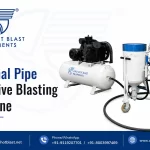
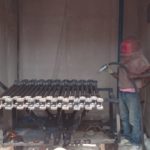
Sand Blasting Machine in Saudi Arabia: A Complete Guide to Industrial Abrasive Blasting Equipment
Saudi Arabia’s climate is hard on metal. Heat, humidity on the coast, salt air and fine desert dust all speed up rust and wear steel surfaces, and large projects in oil and gas, petrochemicals, construction, shipping and power depend on coatings that last. A coating only lasts when the surface under it is clean and correctly prepared, and that is the job of a sand blasting machine. This guide explains what a sand blasting machine is, how it works, the main types used in Saudi Arabia, where they are used, which abrasive to choose and which safety rules matter. If you are planning a project, you will also see how to choose the right machine and how to ask for a quote from Airo Shot Blast.
What Is a Sand Blasting Machine in Saudi Arabia?
A sand blasting machine, also called a sandblasting machine or abrasive blasting machine, cleans and prepares a surface by firing abrasive material at it at high speed with compressed air. The impact removes rust, mill scale, old paint and dirt, and it leaves a clean, slightly rough surface that paint, coating or plating can grip. In an industrial setting, this is the standard step before painting, galvanizing, powder coating or lining.
The name comes from the days when sand was the only abrasive used. Today, the same machine can run many other abrasives, so the process is also called abrasive blasting. For Saudi Arabia, where coatings must perform in harsh heat and corrosive conditions, correct surface preparation is not optional. A properly blasted surface helps the coating stay attached for longer, which means fewer repairs and less downtime.
How Does a Sand Blasting Machine Work?
Every sand blasting machine follows the same six steps:
- Filling the vessel: the abrasive goes into a pressure vessel, also called a blast pot or hopper, which is then sealed.
- Pressurizing: compressed air from a compressor fills the vessel, so the pressure inside the pot and in the blast hose is equal.
- Metering: a valve feeds the abrasive in a controlled amount into the air stream, so the blast stays steady.
- Propelling: the air carries the abrasive through the blast hose and out of the nozzle at high speed.
- Striking the surface: the abrasive hits the surface and removes rust, scale and old coating. It also creates the surface profile that helps the coating stick.
- Recovering and cleaning: in closed systems, usable abrasive is collected and reused, and a dust collector draws away the dust.
The operator controls the result through air pressure, nozzle size, distance and angle from the surface, and the abrasive chosen. A deadman handle switches the machine on and off, so the blast stops the moment the operator lets go. To read the process in more detail, see our guide on how a sand blasting machine works.
Main Types of Sand Blasting Machines in Saudi Arabia
The right machine depends on the size of the part, where the work takes place and how much work there is to do.
| Type | Best for | Highlights |
|---|---|---|
| Portable sand blasting machine | Site work on tanks, pipelines, steel structures | Movable, connects to a compressor |
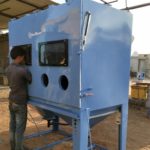
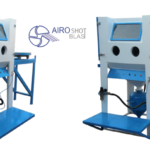
| Sand blasting cabinet | Small and medium parts | Enclosed, clean, operator works through gloves |
| Blast room | Large or many parts | Enclosed room with abrasive recovery and dust collection |
| Pressure blasting machine | Heavy rust and large jobs | Strong, fast blasting from a pressurized pot |
| Suction blasting machine | Light work and small cabinets | Simple design, gentle control |
| Wet blasting machine | Dust-sensitive jobs | Mixes abrasive with water, reduces dust and heat |
Industrial Sand Blasting Machine in Saudi Arabia
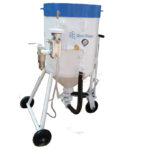
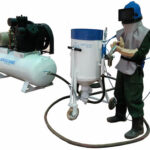
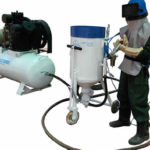
An industrial sand blasting machine is built for continuous, demanding work, such as cleaning pipelines, storage tanks, steel fabrications and heavy equipment. Industrial machines have larger pressure vessels, stronger frames, wear resistant nozzles and hoses, and often work with a high capacity compressor. For jobs on site, a portable sand blasting machine is the usual choice. For repeat work on a large volume of parts, a wheel based shot blasting machine is faster.
Sand Blasting Equipment in Saudi Arabia: What a Complete Setup Includes
A sand blasting machine works as part of a system. A complete setup of sand blasting equipment usually includes:
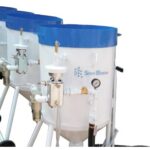
- Pressure vessel (blast pot): holds and meters the abrasive. See our sand blasting hopper.
- Blast hose, couplings and nozzle: carry the abrasive and shape the blast.
- Compressor: provides the compressed air. Its size should match the nozzle.
- Dust collector: keeps dust out of the work area.
- Abrasive recovery system: collects and cleans the abrasive for reuse.
- Operator protection: a blasting helmet with fresh air, gloves and a protective suit.
Cabinets and Blast Rooms
For small parts, an enclosed sand blasting cabinet keeps dust and abrasive inside the chamber. For bigger work, an abrasive blasting room or blast room system provides a controlled space with recovery and dust collection.
How to Choose the Right Machine for Your Project
- Size and weight of the parts: small parts suit a cabinet, large parts suit a blast room or a portable unit.
- Location: if the work cannot be moved, choose a portable machine.
- Finish required: the standard of cleanliness you need, such as Sa 2.5, decides the abrasive and pressure.
- Volume of work: high volume suits an automatic or wheel-based machine.
- Compressor capacity: check that the compressor can run the nozzle size you plan to use.
- Electrical power and site conditions: machines can be configured to suit the local power and the working environment.
- Dust control: choose enclosed systems or a dust collector where the work is near people or other equipment.
Not sure which one fits? Send us your part size, location and quantity, and we will recommend a configuration. Use the contact page to ask for a quote.
Where Are Sand Blasting Machines Used in Saudi Arabia?
The sand blasting machine in Saudi Arabia is used wherever steel and concrete need protective coatings:
- Oil and gas: pipelines, storage tanks, pressure vessels, valves and platforms.
- Petrochemical and industrial plants: structural steel, vessels and pipework in industrial cities such as Jubail and Yanbu.
- Construction and infrastructure: steel beams, bridges and large building projects.
- Shipyards and marine work: hulls, decks and port equipment along the coast.
- Power and water: desalination and power plant equipment, which face heat and salt.
- Heavy engineering and fabrication workshops: weld cleaning and surface preparation before painting.
- Automotive and equipment workshops: reconditioning of parts and chassis.
- Maintenance and repair: removing rust and old coatings from existing structures.
What Abrasive Should Be Used in an Abrasive Blasting Machine in Saudi Arabia?
The right abrasive depends on the material, the finish and the profile you need.
- Steel grit: aggressive and reusable, good for heavy rust and scale.
- Steel shot: round, used for cleaning and peening. See Advantages of Using Steel Shot.
- Aluminium oxide: hard and sharp, suited to fast cutting and fine finishing.
- Garnet: clean, versatile and low dust.
- Copper slag: economical for large structural jobs.
- Glass beads: give a smooth, matte finish on delicate parts.
- Silica sand: used in the past, but the fine dust can cause serious lung disease, so safer silica free abrasives are strongly preferred and local regulations should be followed.
Choose the abrasive for the surface, the standard you need to reach and whether it can be reused. Browse our abrasives and abrasive media range, or tell us the job and we will suggest one.
Important Safety Considerations for Sandblasting Machines in Saudi Arabia
Blasting creates dust and flying abrasive, and work in Saudi Arabia is often in strong heat, so safety needs extra attention.
- Operator protection: in open blasting, wear a blasting helmet with fresh air, gloves, a protective suit and safety shoes.
- Heat: plan breaks, provide water and shade, and use ventilated helmets, because working in heat in protective gear adds strain.
- Dust control: use a dust collector or enclosed system, and keep other people away from the blast zone.
- Avoid silica sand: fine silica dust causes silicosis, so choose silica free abrasives.
- Pressure: release the pressure fully before refilling or opening the vessel.
- Equipment checks: inspect hoses, couplings and nozzles for wear before each job.
- Clean, dry air: use a filter and moisture separator on the compressed air, which is especially important in humid coastal areas.
- Grounding: ground the equipment, and keep it away from flammable materials, particularly in oil and gas areas.
- Training: only trained operators should use the machine, and service it regularly.
- Closed systems when possible: a cabinet or blast room keeps the operator outside the blasting area.
Get a Quote for a Sand Blasting Machine in Saudi Arabia
Airo Shot Blast makes sand blasting machines, sandblasting cabinets, hoppers, shot blasting machines, grit blasting machines, dust collectors and abrasives. Every machine can be customized to your parts, your site and your quantity, and we provide after-sales support. We export our machines and can ship them to customers in Saudi Arabia.
To receive a quote for your sand blasting equipment, send us:
- The type and size of the parts or structure you need to blast.
- The abrasive you plan to use, or the finish you need to reach.
- Your daily quantity and work location.
- The compressor capacity you have, if any.
Explore the product list, the full abrasive blasting machine category, or learn more about our company.
Request a Free Quote → | Call: +91-7728877775
FAQ’S
It is used to remove rust, scale and old paint from steel and other surfaces, and to prepare them for painting, coating or plating. It is common in oil and gas, construction, shipping and heavy engineering.
Compressed air carries abrasive from a pressure vessel through a hose and nozzle at high speed. The abrasive strikes the surface and cleans it, and the used abrasive is collected and reused in closed systems.
A portable sand blasting machine, because it can be moved to tanks, pipelines and structures and connected to a compressor. For small parts in a workshop, a cabinet is cleaner and safer.
It is a heavy duty machine for continuous work, with a larger pressure vessel, stronger construction, wear resistant parts and a high capacity compressor.
