
How Does a Sand Blasting Machine Work? A Complete Step by Step Guide
Rust, old paint and scale have to come off a surface before it can be painted, coated or plated, and a sand blasting machine is one of the most common ways to do it. If you own a workshop or work in surface preparation, knowing how does a sand blasting machine works helps you pick the right equipment, choose the right abrasive, get a better finish and keep your operators safe. This guide explains how a sand blaster works step by step, the equipment used, the main blasting methods, the suitable abrasives, common problems and the safety rules. If you plan to buy a machine, it also shows how to get a quote from a trusted manufacturer in Jodhpur, India. You can browse our full sand blasting machine page at any point.
What Is a Sand Blasting Machine?
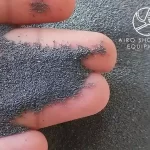
A sand blasting machine, also called a sand blaster or sandblaster, cleans or prepares a surface by firing abrasive material at it with force. In most sand blasting machines the force comes from compressed air. The impact removes rust, old paint, scale and dirt, and leaves the surface clean and ready for painting, coating or plating.
Sandblasting is also called abrasive blasting, and the name of the process usually depends on the abrasive used. That is why you hear terms like sandblasting, shot blasting, bead blasting and soda blasting for the same basic method. See our wider abrasive blasting machine category for other formats.
How Does a Sand Blasting Machine Work? The 6-Step Process
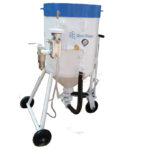
- Filling the vessel: the abrasive goes into a pressure vessel, which is then sealed. This vessel is also called the blast pot or sand blasting hopper.
- Pressurizing: compressed air from the compressor fills the vessel, so the pressure inside the pot and in the blast hose is equal. This lets the abrasive flow steadily.
- Metering: the abrasive is fed in a controlled amount into the air stream through a metering valve. This keeps the blast steady and stops the abrasive from being wasted.
- Propelling: compressed air carries the abrasive through the blast hose and out of the nozzle at high speed.
- Striking the surface: the abrasive hits the surface and removes rust, paint and contaminants. It also creates a surface profile that helps paint and coating stick better.
- Recovering and cleaning: in closed systems, usable abrasive is collected and reused, and a dust collector draws the dust away. See our dust collector.
The operator controls the result through the air pressure, nozzle size, distance and angle from the surface, and the abrasive used. A deadman handle switches the machine on and off, so the blast stops the moment the operator lets go.
Pressure Blasting vs Suction Blasting: How the Abrasive Reaches the Nozzle
All sand blasting machines follow the same idea, but they feed the abrasive in one of two ways:
- Pressure blasting: the abrasive sits in a pressurized pot and is pushed into the hose. It is strong and fast, and it suits heavy rust and large jobs.
- Suction (siphon) blasting: the Venturi effect draws abrasive from a non-pressurized hopper into the air stream at the gun. It is simple and suits small cabinets and light work.
Dry blasting is often run at around 5 to 7 bar (70 to 100 psi), but the right pressure depends on the abrasive, the surface and the nozzle, so always follow the machine’s rating.
How Does a Sand Blaster Work in Different Setups?
The six steps apply everywhere, but the setup changes how the work is done:
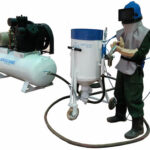
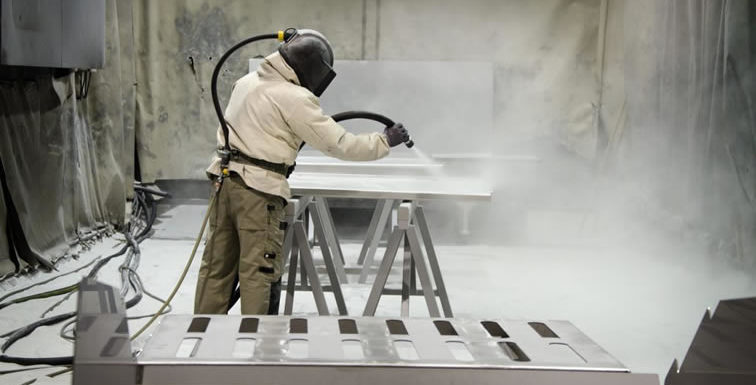
- Open (portable) blasting: the operator holds the nozzle and blasts in the open. It suits large structures that cannot be moved. See our portable sand blasting machine.
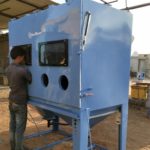
- Cabinet blasting: the part sits inside a closed box, and the operator works through gloves. It is clean and safe for small parts.
- Blast room blasting: the operator works inside a large enclosed room for big or many parts.
- Wheel blasting: a spinning wheel throws the abrasive instead of compressed air. It is fast and suits high-volume production. See our shot blasting machine range.
Equipment Used in Sandblasting
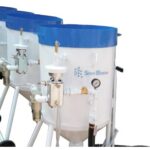
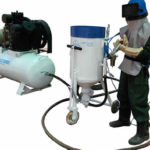
Portable blast equipment: a pressurized vessel (the sand blasting hopper or pressure blast pot) holds the abrasive and meters it into the compressed air stream through a blasting hose and nozzle. For wet blasting, the abrasive is either added to a pressurized water stream or mixed with water into a slurry that is fed into the compressed air. A portable machine suits site work and large structures such as tanks, bridges and pipelines, and it can be used with steel shot, steel grit or copper slag, depending on the job.
Automated blasting: the blasting is done under cover, so surface preparation and coating can continue with less effect from the weather on the prepared steel. An automatic shot blasting machine, blast room system or wheel blasting machine is usually used. The impact on the environment is small, especially when a dust collector is connected. See our shot blasting machine category.
Blast cabinet: a typical sand blasting cabinet has four parts:
- Containment: the enclosed chamber.
- Abrasive blasting system: the gun and nozzle.
- Abrasive recycling system: collects and reuses the abrasive.
- Dust collector: removes fine dust from the chamber.
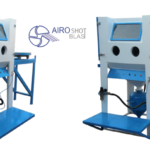
It is a closed loop system. The operator stands outside and puts their arms into gloves fitted to the glove holes. They watch the part through a view window and turn the blast on and off with a foot pedal. For small jobs, see the bench top abrasive blasting cabinet, and read our sandblasting cabinet guide for how a cabinet works in detail.
Main Types of Sandblasting Methods
- Dry blasting: uses abrasive and compressed air only. It is the most common and the fastest.
- Wet blasting (hydro blasting): mixes abrasive with water, or uses water with abrasive, to reduce dust and heat.
- Wheel blasting: a spinning wheel throws the abrasive at the part. It is the principle behind shot blasting machines.
- Blast room: a large enclosed room for big or many parts, with abrasive recovery and dust collection. See the abrasive blasting room and the shot blasting room.
- Micro abrasive blasting: uses very fine abrasive in a small, precise stream for delicate parts and detailed work, such as etching abrasive blasting.
- Vacuum blasting: recovers the abrasive and dust at the nozzle itself, for dust free work. See the vacuum abrasive blasting machine.
When the heat from dry blasting could damage a part, wet blasting is used. It produces the profile without the frictional heat.
Common Problems and What Causes Them
| Problem | Likely cause | What to check |
|---|---|---|
| Weak or uneven blast | Low air pressure, worn nozzle or blocked hose | Compressor output, nozzle bore, hose and couplings |
| Abrasive not flowing | Wet or clumped abrasive, blocked metering valve | Dry the abrasive, clean the valve and the pot |
| Slow cleaning | Wrong abrasive size or distance from the surface | Abrasive grade and nozzle distance |
| Poor visibility in a cabinet | Weak dust collection or choked filter | Dust collector and filter |
| Moisture in the blast | No air dryer | Filter and moisture separator on the air line |
Where Does a Sand Blasting Machine Work? Common Uses
- Steel structures, bridges and storage tanks
- Shipyards and marine maintenance
- Automobile and engine reconditioning
- Foundries and casting units
- Oil, gas and petrochemical plants, including pipes and pipelines
- Railway workshops
- Fabrication and heavy engineering industries
- Surface preparation before painting, coating, galvanizing or plating
Which Abrasive Should Be Used in a Sand Blasting Machine?
The right abrasive depends on the material, the finish and the surface profile you need.
- Sand: economical for general rust and paint removal, but silica dust is harmful, so safer silica free abrasives are preferred.
- Steel shot: used for cleaning and peening, lasts long and can be reused many times. See Advantages of Using Steel Shot.
- Steel grit: cuts quickly and leaves a rough profile for better coating adhesion. See our grit blasting machine.
- Glass beads: give a smooth, bright finish.
- Aluminium oxide: for tough cleaning on hard surfaces.
- Copper slag: popular for large structural jobs.
- Soda: gentle cleaning for delicate surfaces.
Browse our abrasives and abrasive media range, or contact our team and we will help you choose the right one.
Important Safety Considerations
- Operator protection: in open blasting, operators must wear a sand blasting helmet with fresh air supply, gloves, a protective suit and safety shoes.
- Dust control: use a dust collector or good ventilation, because blasting dust is harmful to breathe in.
- Avoid silica sand where possible: fine silica dust causes serious lung disease, and safer abrasives are available.
- Release the pressure: let it out fully before refilling or opening the vessel.
- Check the equipment: inspect hoses, couplings and the nozzle for wear before each job.
- Keep the air clean and dry: use a filter and moisture separator on the compressed air.
- Grounding: ground the equipment properly and keep it away from flammable materials.
- Training: train operators and service the machine regularly.
- Use a closed cabinet when you can: a closed sand blast cabinet is the safest option, because the operator stays outside the blasting area.
Sand Blasting Machine Manufacturer in Jodhpur, India
Airo Shot Blast is a leading manufacturer of sand blasting machines, sandblasting cabinets, sand blasting hoppers, shot blasting machines, grit blasting machines, peening machines and dust collectors in Jodhpur, India. The price depends on the machine type, size and production capacity. We offer competitive rates, custom designs and reliable after-sales support, and we export to many countries. Check the latest sand blasting machine price in India, see the full product list, or learn more about our company.
Share your job details and daily requirement with Airo Shot Blast, and we will recommend the right sand blasting machine and send you a quote.
Get a Free Quote → | Call: +91-7728877775
FAQ’S
Abrasive is held in a pressure vessel, metered into a stream of compressed air and fired through a nozzle at the surface. The impact removes rust, paint and scale, and the used abrasive is collected and reused in closed systems.
Fill and seal the pot, pressurize it, meter the abrasive, propel it through the hose and nozzle, strike the surface, then recover the abrasive and collect the dust.
Pressure blasting pushes abrasive from a pressurized pot and is stronger and faster. Suction blasting draws abrasive from a hopper by the Venturi effect and is simpler, so it suits small cabinets and light work.
Yes, a sand blasting machine needs a compressor. Wheel (shot) blasting machines are different, because a spinning wheel throws the abrasive and no compressed air is needed.
