Sandblasting vs Shot Blasting: Methods, Equipment and Which One to Choose
Whether you are cleaning auto parts, reconditioning rusty steel or preparing a surface for powder coating, abrasive blasting is one of the fastest and most reliable ways to get a clean, coating ready finish. Two methods dominate the industry sandblasting and shot blasting. They sound similar, but they work differently and suit different jobs. At Airoshot Blast, a manufacturer, supplier and exporter of blasting equipment in Jodhpur, India, we build both kinds of machines. This guide explains how each method works, what equipment is involved, where they are used, which abrasive to pick, and how to stay safe.
What Is Sandblasting?
Sandblasting is a surface preparation method that uses compressed air to drive abrasive media at high speed onto a surface. The name is historical. Today the abrasive is rarely plain sand, and the term covers any media moved by compressed air, including glass beads, aluminium oxide, steel grit and baking soda.
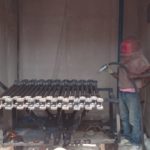
The surface being treated could be anything auto parts that need oil and grease removed, rusty chains being reconditioned, or old steel cabinets being prepared for powder coating. The impact removes rust, old paint, scale and contaminants, and leaves a clean, lightly roughened surface that new coatings bond to well.
The technique has been around for over a hundred years. Early sandblasting meant an open stream of sand and clouds of harmful dust. Modern systems use enclosed cabinets, controlled nozzles and media recovery, which makes the process cleaner, safer and far more precise. A sand blasting machine is the core of most of these setups.
What Is Shot Blasting?
Shot blasting also cleans and prepares surfaces, but it does not use compressed air to move the media. Instead, a fast spinning wheel throws steel shot or steel grit against the surface using centrifugal force. The media is thrown rather than blown.
This makes shot blasting a much more powerful and productive process. It is typically used for larger, tougher jobs where a strong impact and dense media are needed, such as heavy steel plates, castings, structural sections and bulk batches of parts. Because the force is high, shot blasting must always be done inside a sealed enclosure.
A shot blasting machine is built around this wheel system, and most designs recycle the shot continuously, which keeps running costs low on high-volume work.
Main Types of Blasting Equipment
Sandblasting equipment
- Blast rooms: Controlled enclosures with abrasive recovery, built for high productivity and consistent results.
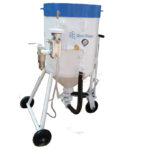
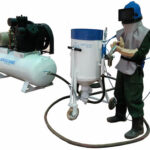
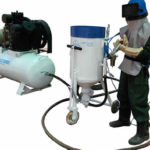
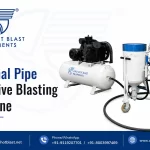
- Portable blasting stations: Pressure-pot systems in different sizes for on-site work. Our portable sand blasting machine is designed for exactly this.
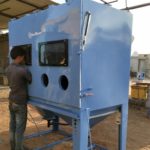
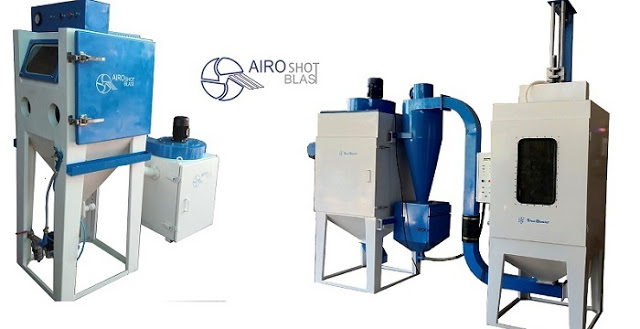
- Blast cabinets: Stationary enclosed units, available in suction and pressure types, ideal for small and medium parts. See our grit blasting cabinet.
- Tumble shot blast machines: Rubber lined chambers that tumble small parts while nozzles blast them evenly.
- Bulk blasting systems: Large stationary or truck mounted systems for big scale work.
- Blast and recovery systems: Machines that blast and vacuum at the same time, so no dust escapes into the open air.
- Wet blasting machine: Water is added to reduce heat and dust and give a gentler, scrubbing action.
- Cryogenic deflashing: Extremely low temperatures make materials like rubber, plastic, zinc and magnesium brittle, so excess flash can be removed precisely.
Shot blasting equipment
- Tumble blast machines: Continuous blasting with constant abrasive recycling, built with rubber belts or steel flights.
- Swing table shot blasting: Direct drive wheels that swing out for easy loading and unloading.
- Table blasters: Fixed direct drive wheels mounted inside a blast cabinet.
- Spinner hangers: Machines with rotating hooks that turn parts for all round coverage.
- Hanger blast equipment: Systems with trolleys on monorail tracks for specific shot blasting operations.
- Cylinder shot blasting machine: Specialised machines for removing rust and old paint from metal cylinders.
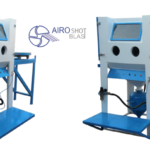
- Shot blasting cabinets: Compact enclosed units for smaller work. Explore our shot blasting cabinet.
Not sure what fits your work? Our guide to the different types of sandblasting machine is a good starting point.
Sandblasting vs Shot Blasting: Which One Should You Choose?
The right choice depends on your parts and your goals.
- Choose sandblasting for detailed or delicate work, complex shapes, lower volumes and on site jobs, where control matters more than speed. It also gives you a wide choice of media, from soft to hard.
- Choose shot blasting for large, heavy or high volume work, where speed, consistent coverage and low media cost matter most.
Many workshops use both shot blasting for bulk cleaning and sandblasting for finishing and touch ups.
Where Are These Machines Used?
Abrasive blasting equipment is used across a wide range of industries:
- Foundries, for cleaning castings and removing sand and scale.
- Steel and fabrication, for scale removal and surface profiling before welding or coating.
- Automotive, for restoring bodies and cleaning components.
- Construction, for treating structural steel.
- Shipbuilding, for hull and plate preparation.
- Aerospace and engineering, for precision surface finishing.
Which Abrasive Should Be Used?
The abrasive decides the finish, so choose it for the job that follows.
- Steel shot: Round and durable, used mainly in wheel-blast systems for cleaning and peening.
- Steel grit: Angular and aggressive, creating a rougher profile that coatings grip well.
- Aluminium oxide: A hard, sharp media for fast cutting on tough surfaces.
- Glass beads: A gentler media that leaves a smooth, satin finish.
- Baking soda: The softest option, suited to delicate surfaces.
Match the media to the metal and to the coating you plan to apply. sand blasting nozzle gives you better control over the blast stream.
Important Safety Considerations
Blasting is effective, but it must be done carefully.
- Operator protection: Use a sand blasting helmet with fresh air supply, gloves, a suit and safety footwear. Never breathe blasting dust.
- Containment: Shot blasting in particular must always be fully enclosed, since the thrown media can cause serious damage or injury.
- Dust control. Use proper extraction and ventilation so dust does not spread.
- Equipment checks. Inspect hoses, nozzles, wheels and seals regularly.
- Trained operators. Only trained people should run the machines.
Talk to Airo Shot Blast
If you are comparing machines, our team will recommend the right model for your parts, volume and budget. Check our product list to see the full range, or request a quote and we will reply with a configuration and price. You can also call us on +91-9119207701.

1 thought on “What is the difference between shot blasting and sandblasting?”