


Sandblasting Cabinet Manufacturer in India: Types, Uses, Abrasives and Safety Guide
Cleaning rust, old paint and scale from metal is messy work. A sandblasting cabinet makes it clean, controlled and repeatable by carrying out the whole process inside a sealed chamber. This guide explains what a sandblasting cabinet is, how it is manufactured in India, its main types, where it is used, which abrasives suit it and how to operate it safely.
What Is a Sandblasting Cabinet?
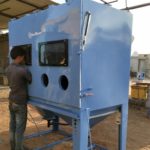
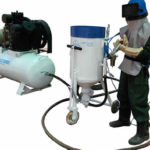
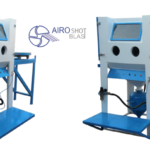
A sandblasting cabinet is an enclosed sand blasting chamber in which abrasive media is propelled at a workpiece with compressed air to remove rust, paint and other surface contaminants. It is a closed loop system, the abrasive is blasted, collected and recycled, so very little is wasted.
The operator stands outside the cabinet and places their hands in gloves fitted to the glove ports. They watch the part through a viewing window and control the blast with a foot pedal. A dust collector is connected to the cabinet to remove dust and keep the view clear, and the blast gun has a hard-wearing nozzle that resists abrasive wear.
All sandblasting machines work on the same basic idea, but the way the abrasive is fed into the gun differs, which gives the three types of cabinets described below.
Key benefits:
- Dust stays inside the chamber, so the workplace stays cleaner
- Abrasive is recycled, which lowers running cost
- Operator is protected from flying abrasive and most dust
- Consistent surface finish on every part
- Suitable for cleaning, deburring, paint removal and surface preparation before coating
How Are Sandblasting Cabinets Manufactured in India?
Manufacturers in Jodhpur and other industrial hubs build these cabinets in a structured way:
- Design and planning: The cabinet size, blasting type and level of automation are chosen based on the components and daily quantity.
- Material selection: Quality steel sheets are selected for the body, along with a viewing window, glove ports, a blast gun, sand blasting hoses, valves and a dust collector.
- Cutting, bending and welding: The chamber is fabricated to be sturdy, airtight and vibration-free.
- Fitting components: The blast gun, sand blasting nozzle, abrasive hopper or pressure vessel, lighting, foot pedal and dust extraction system are installed.
- Surface treatment: The cabinet is cleaned and painted for corrosion resistance.
- Testing and quality checks: Air leaks, blasting performance and dust extraction are tested before dispatch.
Our mass production setup helps us keep prices competitive, and every cabinet can be customized as per your budget and component quantity.
Main Types of Sandblasting Cabinets in India
| Type | How it works | Highlights |
|---|---|---|
| Wet blasting cabinet | A seal-less slurry pump mixes abrasive and water into a slurry, which is pumped to the blast gun and driven out by compressed air | Slurry-based, low dust |
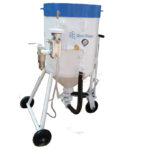
| Pressure blasting cabinet | Abrasive is held in a pressurized blast pot, with equal pressure in the pot and the blast line | Strong, fast blasting |
| Suction blasting cabinet | Venturi effect draws abrasive from a non-pressurized hopper into the air stream at the gun | Two hoses to the gun, simple design |
| Bench top abrasive blasting cabinet | Compact cabinet for small parts | Small workshops, tools, small components |
| Automatic sand blasting cabinet | Automated movement and blasting | High-volume, consistent output |
| Cyclone sandblast cabinet | Cyclone separator removes heavy dust before the filter | Better abrasive recovery |
Sandblasting cabinet price depends on:
- Size of the cabinet: larger chambers need more material and fabrication
- Type of blasting: wet, pressure or suction
- Level of operation: manual, semi automatic or automatic
- Dust collector type: fabric bag, reverse pulse jet pleated filter or cyclone
- Production capacity and customization: extras like turntables, conveyors and special nozzles
Share your component size and daily quantity with us, and we will suggest the right cabinet.
Where Are Sandblasting Cabinets Used?
- Automobile and vehicle industry: wheels, engine parts and body components
- Fabrication and engineering workshops: weld cleaning and pre coating preparation
- Foundries and casting units: removing sand and scale from castings
- Aerospace and rail industries: cleaning and surface preparation of precision parts
- Powder coating and painting units: surface profiling for better adhesion
- Tool and die workshops: cleaning moulds and dies
- Oil, gas and heavy industry: valves, fittings and small pressure parts
- Restoration work: cleaning old metal parts and tools
For very large components, a blasting room or a shot blasting machine is usually a better choice than a cabinet.
Which Abrasive Should Be Used in a Sandblasting Cabinet?
The right abrasive media depends on the material and the finish you need.
- Steel grit: aggressive and reusable, good for heavy rust and scale
- Steel shot: round, used for peening and smoother finishes
- Aluminium oxide: hard and sharp, suited to cutting and fine finishing
- Garnet: clean, versatile and low dust
- Glass beads: gentle, for polishing and a satin finish on delicate parts
- Silicon carbide: very hard, for tough materials and precision work
How to choose:
- Decide whether you need heavy removal or a light finish.
- Match the abrasive hardness to the material being blasted.
- Choose a grit size that gives the surface roughness you need.
- Prefer reusable abrasives, since a cabinet recycles them and saves cost.
Avoid free silica sand where possible, because silica dust is a serious health hazard.
Important Safety Considerations
A cabinet is much safer than open blasting, but it still needs care:
- Keep the dust collector running and clean or replace filters on time.
- Check glove ports and the viewing window for cracks and leaks, because a damaged cabinet lets dust escape.
- Close the door fully before starting the blast.
- Inspect the nozzle, hoses and gun regularly for wear.
- Stay within the rated pressure of the machine.
- Wear basic protection such as safety glasses and a dust mask when loading, unloading or emptying dust.
- Avoid silica containing abrasives.
- Train operators so they know how to run and maintain the cabinet.
