Metalizing Gun: Types, Working, and How to Choose the Right Thermal Spray Process
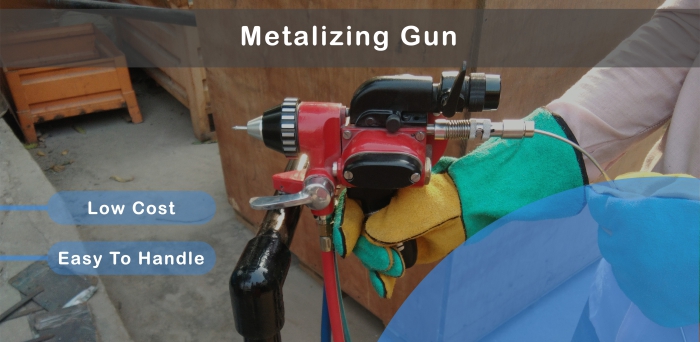
A metalizing gun is the common name for equipment used in the thermal spray coating process, where molten metal is sprayed onto a surface to form a protective or decorative layer. These coatings are long lasting, efficient, and highly flexible, which is why they are widely used in industries such as marine, oil and gas, power, automotive, and heavy engineering.
What Is a Metalizing Gun, and Where Can You Buy One at the Best Price?
A metalizing gun is a thermal spray gun that melts a coating material (wire or powder) and propels it onto a prepared surface at high speed. The material cools and bonds to the surface, creating a metallic coating that protects against corrosion, wear, and heat, or improves appearance.
If you are looking for a metalizing gun at the best price, do not compare on price alone. Look for a supplier that offers:
- A complete range of arc spray gun, combustion wire, and combustion powder guns
- Genuine spare parts, noz
- Genuine spare parts, nozzles, and consumables
- Technical support, training, and after sales service
- Equipment that matches your coating material and production needs
You can explore a professional range of thermal spray gun and the electric arc spray gun to compare models and specifications.
How Does a Metalizing Gun Work?
Every metalizing process follows the same basic principle:
- The coating material (wire or powder) is fed into the gun.
- A heat source, either an electric arc or a fuel gas oxygen flame, melts the material.
- Compressed air or gas atomizes the molten metal into fine particles.
- The particles are propelled at high velocity onto the prepared surface, where they bond and build up a uniform coating.
The final coating quality depends on the heat source, the feed rate, the spray distance, and proper surface preparation, usually by abrasive blasting before spraying.
Main Types of Metalizing Gun Processes
Electric Arc Spray Gun
Two metallic wires are given opposite electrical polarity and fed toward each other. This creates a molten arc between them. Compressed air or an inert gas then atomizes the molten metal and drives it onto the surface.
- Can spray any metal with a melting point below 10,000°F
- Provides semi-metallurgical or mechanical bonds with strength up to 5,000 PSI, depending on equipment and material
- The substrate stays below 250°F, so there is no distortion
Powder Flame Spray Gun
The heat source works on the same principle as thermal spray wire, but powdered material is fed through the flame and propelled by high velocity oxygen or air onto the surface.
- Can spray any powdered metal with a melting point below 5,500°F
- Mainly used for abradable coatings and hard surfacing
Combustion Wire Spray
The coating metal is fed in wire form into a fuel gas-oxygen flame, flame spray gun where combustion heat of around 5,000 to 5,500°F melts it. Compressed air surrounding the flame atomizes the molten metal into fine, spherical particles and propels them onto the metal surface.
- Can spray any wire with a melting point below 5,500°F
- Atomization and melting can be controlled by adjusting the wire feed rate
Which Metalizing Gun Should You Choose?
The right choice depends on your application, material, and budget:
- Choose electric arc spray for large surfaces, high deposition rates, and heat sensitive parts where distortion must be avoided. It is a strong choice for corrosion protection on steel structures.
- Choose combustion wire spray when you need flexibility with different wire materials and good control over the coating.
- Choose combustion powder spray for hard surfacing and abradable coatings, or when your material is only available as powder.
Before buying, also consider coating material, job size, power or gas availability, spare parts supply, and operator training.
Important Safety Considerations
Thermal spraying involves heat, fumes, noise, and high-pressure gas, so safety is essential:
- Wear proper PPE: a respirator or air fed helmet, heat resistant gloves, eye and face protection, hearing protection, and protective clothing.
- Ensure ventilation and fume extraction, as metal fumes and fine dust are hazardous to breathe.
- Handle fuel gases and oxygen carefully, with correct regulators, hoses, and flashback arrestors, and check for leaks regularly.
- Protect against electrical hazards when using arc spray gun, with proper earthing and insulated cables.
- Reduce fire risk by clearing flammable materials from the work area.
- Maintain equipment and follow the manufacturer’s operating instructions.
Conclusion
A metalizing gun is a reliable way to extend the life of metal parts and structures with durable, flexible coatings. Whether you need electric arc, combustion wire, or combustion powder spray, choosing the right process and a trusted supplier gives you better coating quality and a lower cost over time.
Looking for the best price on a metalizing gun? Contact us today for expert guidance, product details, and a customized quote.
Metalizing gun is a common name given to a thermal spray coating process that is used for coating metal on product planes. The resultant metallic coatings can be used for protecting and embellishing purposes. These coatings are also known to be long-lasting, efficient and highly flexible. Coatings specialize in three types of metalizing gun processes:
- Electric arc spray
- Combustion powder spray
- Combustion wire spray
Metalizing gun coating process | Electric arc spray
In this process, we use two metallic wires that are electrically charged with crossing polarity as the coating feedstock. This will cause them to yield a molten arc between each other. We will next include insert gas or high-velocity air to trigger the atomization of the now molten material and move onto the substrate to form the coating. If you opt for the electric arc spray process, it can spray any type of metals that have melting points below 10,000°F.
Depending on the equipment remaining used and the material implying applied, that Coatings can provide metallic coatings with either semi-metallurgical bonds or mechanical bonds up to 5000 P-S-I. Distortion will not occur because the substrate is not exposed to a high temperature of over 250°F.
Metalizing gun combustion powder spray
In that process, the basic principle of the heat source is the same as wire spray without that particles are supplied through a flame and impelled by high-velocity oxygen or air onto a surface. As with the metalizing process, each powdered metal having a melting point below 5500°F. can be sprayed. This process is essentially used for abradable coatings and spray hard surfacing.
Metalizing gun combustion wire spray
In this process, we maintain the spray metal in wire form into a fuel gas oxygen flame where it is rendered by the heat temperature up to 5000 to 5500°F of that combustion. Compressed air is centered around the flame, atomizing the molten material into fine spherical bits and propelling these particles at high velocity onto the surface of the metal.
We can manage the atomization and the melting of metals with different melting limits when we control the feeding rate of the wire through the flame. When you opt for this method, we can spray any wire as long as it features a melting point below 5500°F.
