
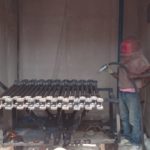

Thermal Spray Gun: Working, Types, Applications and Price in India
Wear, corrosion and abrasion cost industries a great deal in repairs and downtime. A thermal spray gun offers a practical and cost effective way to protect metal components and extend their life. This guide explains what a thermal spray gun is, how it works, the main types available, where it is used and which abrasive to choose for surface preparation. It also covers important safety practices and what to know before you buy a thermal spray gun in India.
What Is a Thermal Spray Gun?
A thermal spray gun is a device used in coating processes where finely divided metallic or non-metallic material is heated to a molten or semi molten state and sprayed onto a surface. The coating material can be fed as thermal spray powder, ceramic beads or thermal spray wire.
Thermal spraying has several advantages over other coating methods:
- The base metal receives very little heat, so the parent material is not distorted. This makes a thermal spray gun suitable for shafts, rollers and other precision components.
- Coating thickness is easy to control with the right thermal spray equipment, whatever the size of the component.
- It protects against wear, corrosion, abrasion, erosion and cavitation in a cost-effective way, using materials such as thermal spray powder, thermal spray wire and tungsten carbide powder.
How Does a Thermal Spray Gun Work?
The process follows four basic steps:
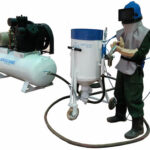
- Surface preparation: The component is cleaned and roughened with a grit blasting machine so that the coating bonds firmly.
- Heating: The gun heats the coating material using a flame, an electric arc or plasma until it is molten or semi-molten.
- Spraying: Compressed air or gas carries the particles in a fast stream towards the component.
- Coating build-up: The particles flatten on impact and build up a dense, uniform layer. The result is a protective coating applied with thermal spray equipment.
Main Types of Thermal Spray Guns
Several types of thermal spraying are in common use:
- Powder flame spray gun: Uses a fuel gas flame to melt thermal spray coating. It is simple to operate and widely used for general repair and protection.
- Wire flame spray gun: Melts thermal spray wire in a flame and sprays it with compressed air. It is common for zinc and aluminium coatings.
- Wire arc spray gun: Uses an electric arc between two wires to melt the material. It gives high deposition rates for large surfaces.
- Plasma spray gun: Uses a high-temperature plasma jet for wire and powder. It gives excellent coating quality with minimum heat input to the base metal.
- HVOF gun: The HVOF spray gun sprays at supersonic speed and produces very dense, hard coatings for severe wear conditions.
Thermal spray gun price in India: The price depends on the type of gun, the spray process, the accessories supplied and the level of automation. We offer a wide range of thermal spray guns that are robust in design, sturdy in construction and dimensionally accurate, and each one is quality tested by our professionals. For the latest price, share your application details and we will send you a suitable quotation.
Key features of our thermal spray guns:
- Excellent finish
- High tensile strength
- Corrosion resistance
- Reliable and efficient operation
- Long lasting material quality
- High performance, with a plasma spray gun for low heat input and an Plasma HVOF spray gun for very dense, hard coatings
- Easy to operate
Where Are Thermal Spray Guns Used?
Thermal spray coating is used in many industries:
- Industrial and mechanical applications, such as shafts, rollers and pump parts, coated with a thermal spray gun to resist wear
- Automobile components, including engine parts, piston rings and cylinder liners
- Corrosion-control coatings using aluminium wire and zinc wire applied with a wire arc spray gun
- piston rings
- Decorative coatings using thermal spray wire and thermal spray powder
- EMI and RFI shielding for defence applications, often done with plasma spray equipment
- Power plants, paper mills, steel plants and marine equipment, where an HVOF gun with thermal spray coating powder gives long lasting wear protection
Plasma flame spray services (wire and powder) are especially useful because they give excellent coating quality while keeping heat input to the base metal low.
What Abrasive Should Be Used?
Coating adhesion depends on a clean, rough surface, so blasting before spraying is essential. The right abrasive matters:
- Aluminium oxide: The most widely recommended abrasive for thermal spray preparation. It is hard and angular and gives a consistent surface profile.
- Chilled iron grit or steel grit: Suitable for heavy steel components that need a deeper profile.
- Silicon carbide: Used for very hard base materials.
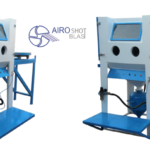
Avoid round abrasives such as steel shot or glass beads, because they peen the surface instead of roughening it, and the coating will not bond well. Use clean, dry, angular abrasive and spray soon after blasting, before the surface oxidises. A suitable sandblasting machine or shot blasting machine and the correct abrasive size give the best coating life.
Important Safety Considerations
Thermal spraying involves heat, compressed gases, fine powders and noise, so safe practices protect both operators and equipment.
Personal protective equipment (PPE)
- Wear a respirator or an air-fed blasting helmet approved for fine metal dust and fumes.
- Use hearing protection, as spray guns can be very loud.
- Wear heat-resistant sandblasting hand gloves, flame retardant blasting suits, safety boots and tinted eye protection.
Gas and fire safety
- Fuel gases are highly flammable. Store gas cylinders upright, secured and away from heat, using a gas cylinder trolley or cylinder stand.
- Check gas hoses, gas regulators and fittings for leaks before every use, and use flashback arrestors.
- Keep fire extinguishers nearby and keep oxygen away from oil and grease.
Spray booth and ventilation
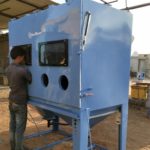
- Spray only in a ventilated, sound-insulated spray booth with a dust collector and filtration system.
- Keep unauthorised people out of the spray area while the gun is running.
Equipment and operator practices
- Only trained operators should run a thermal spray gun, following the manufacturer’s air pressure and gas settings.
- Never point the gun at a person, and shut off the gases fully when you stop spraying.
- Inspect nozzles and hoses regularly and replace worn parts promptly with genuine thermal spray gun spare parts.
- Keep Safety Data Sheets (SDS) for all powders and gases on site.
Looking to Buy a Thermal Spray Gun?
Whether you need a thermal spray gun, thermal spray equipment or a sand blasting machine for surface preparation, our team can guide you to the right setup for your application. Contact us today for the latest thermal spray gun price in India and a customised quotation.
