


Grit Blasting Cabinet: Working, Types, and Safety
A grit blasting cabinet takes everything valuable about grit blasting fast surface cleaning, precise finishing, and rust or paint removal and contains it inside a sealed enclosure. That single design choice changes almost everything about how the process is run, from the safety gear an operator needs to how clean the surrounding workspace stays. Whether you are running a small workshop or a full production line, understanding how a cabinet works and which type fits your application can save you real time and money.
Dust Control and Operator Safety
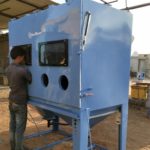
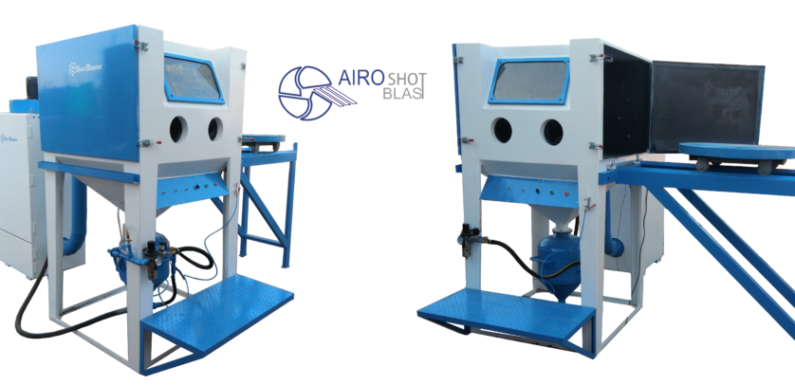
One of the biggest advantages of a grit blasting cabinet is that the entire process happens inside a sealed enclosure rather than out in the open. Blasting inevitably generates a fine cloud of dust as abrasive media breaks down contaminants on the workpiece, and if that dust were allowed to spread freely, it would reduce visibility, settle across the workshop, and create a genuine health hazard for anyone nearby.
To manage this, cabinets are connected to a Dust Collector, which continuously pulls dust out of the enclosed workspace as blasting takes place. This keeps the internal viewing window clear so the operator can see exactly what is happening to the part, and it keeps dust from escaping into the surrounding facility.
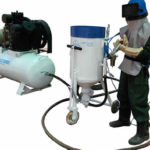
Because the entire operation is contained within the cabinet, the operator does not need to wear the protective gear that open air blasting normally requires, such as a safety suit, respirator mask, sand blasting helmet, protective footwear, or gloves. The sealed design does that protective work automatically. This makes a cabinet setup a genuinely eco friendly, cost effective, and pollution free way to run a blasting operation, since there is no airborne dust or media exposure to manage outside the enclosure, and no ongoing cost of replacing personal protective equipment for every operator on the floor.
Beyond safety, this containment also means the same enclosed space can sit comfortably inside a general workshop without needing a separate isolated blasting room, which is a major advantage for smaller operations working with limited floor space.
How a Grit Blasting Cabinet Works
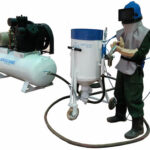
The process starts with the air compressor, which supplies the pressurized air that powers the entire system. Once the adjusting switch on the compressor is set to the correct output, the cabinet’s own switch is turned on, sending power to the solenoid valve. This valve is what actually directs compressed air toward the blasting gun, starting the blast cycle.
Along the way, a few key components keep that airflow clean, dry, and properly regulated:
- Moisture separator: removes moisture from the compressed air before it ever reaches the gun. Moist air can cause abrasive media to clump, which leads to uneven blasting and clogged nozzles, so this step matters more than it might seem.
- Non return valve: prevents abrasive blasting machine from flowing backward into the moisture separator, protecting that component from damage and keeping the airflow moving in one consistent direction.
- Air regulator: regulates the air pressure delivered inside the gun, while the abrasive filter keeps the media evenly mixed with the airflow so the blast stream stays consistent from start to finish.
Together, these parts ensure the abrasive reaches the workpiece at a steady, controlled pressure, with clean, dry air doing the work rather than damp or inconsistent airflow undermining the finish. This is what allows a cabinet to produce a repeatable result, job after job, without the operator needing to constantly adjust settings mid cycle.
Types of Grit Blasting Cabinet
There are three main types of grit blasting cabinets, and each is built around a different way of moving abrasive from storage to the workpiece. Choosing the right one depends on your material, finish requirements, and how much heat the part can tolerate.
Suction Blasting Cabinet
Also known as a Siphon Blast System, this is a dry process where compressed air creates a vacuum inside the blast gun. That negative pressure draws the abrasive mix into the gun, and from there, compressed air carries it through the nozzle and onto the workpiece. A Suction Blasting Cabinet built on this principle tends to be simpler and more affordable, making it a common choice for lighter-duty or lower-volume work.
Pressure Blasting Cabinet
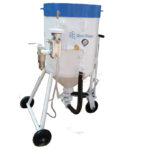
Here, the pressure blasting cabinet abrasive is loaded into a sealed pressure vessel and the vessel itself is pressurized to match the pressure inside the blast hose attached at its base. The abrasive mix is pushed directly into the hose, where compressed gas carries it through the nozzle toward the surface. Like suction blasting, this is also a dry process, but it typically delivers a more forceful, faster blast, which suits heavier-duty cleaning and higher production volumes.
Wet Blast Cabinet
As the name suggests wet blast cabinet, this is a wet process rather than a dry one. A wet blast cabinet mixes abrasive with liquid slurry before injecting it into a compressed gas stream. This method is typically used when the heat generated by friction in dry blasting would risk damaging the part being treated, making it a better fit for delicate components or heat-sensitive materials where a dry process could cause warping or surface damage.
Grit Blasting Machine Manufacturer
We manufacture grit blasting machines at competitive prices and supply across major cities including Delhi, Mumbai, Pune, and Kolhapur, as well as several cities across South India such as Bangalore, Coimbatore, and Chennai. Our grit blasting cabinets are designed to automate production sequences and improve overall working conditions on the shop floor, reducing both manual labor and the safety concerns that come with open-air blasting.
As a sandblasting machine manufacturer in India, we also offer a complete range of automatic grit blasting machines, sand blasting machines, shot blasting machines, and abrasive media, backed by dedicated in-house R&D, at affordable prices. Every machine we build is designed with the same goal in mind: dependable performance, low running costs, and a finish that holds up to whatever comes next in your production process.
Get in touch with us today to find the right grit blasting cabinet for your production line.
