


Dust Collector for Sandblasting Machines in India: Uses, Types, Price and Safety Guide
A dust collector is the part that keeps this dust under control. This guide explains what a dust collector does, how it is manufactured in India, its main types, where it is used, which abrasives and filters work best, and how to use it safely.
Sandblasting and shot blasting are used across metal industries such as aerospace, construction, automotive, foundry, rail and shipbuilding. The process cleans metal, removes rust and scale, and can even strengthen the surface through shot peening. It also produces a lot of fine dust.
What Is a Dust Collector in Sandblasting?
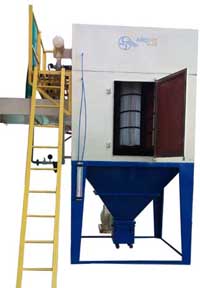
A dust collector is a filtration unit attached to a blasting cabinet, room or shot blasting machine. It pulls in dust filled air, traps the fine particles in filters and releases clean air back into the surroundings. In a shot blasting machine, the separator removes reusable abrasive from waste, and the dust collector cleans the dusty air that remains.
Why it matters:
- Cleaner air: it filters dust so the air released is clean, supporting a pollution free workplace.
- Better visibility: the operator can see the workpiece clearly inside the cabinet.
- Operator protection: it reduces harmful dust in the work area.
- Longer machine life: less dust means less wear on moving parts.
- Abrasive savings: cleaner abrasive can be reused more times.
How Is a Dust Collector Manufactured in India?
Manufacturers in Jodhpur and other industrial hubs build dust collectors in these steps:
- Design and sizing: The unit is designed around the airflow needed by the cabinet, room or machine, and the amount of dust produced.
- Material selection: Quality steel sheets are chosen for the housing, along with filter bags or cartridges, a motor, a blower fan and a dust collection bin.
- Cutting, bending and welding: The housing is fabricated to be sturdy and airtight.
- Fitting components: The blower, filters, ducting connections, filter cleaning mechanism and dust bin are installed.
- Surface treatment: The body is cleaned and painted for corrosion resistance.
- Testing: Airflow, filtration and leak tightness are checked before dispatch.
A good dust collector matches the blasting machine. An undersized unit cannot clear the dust, and an oversized one wastes power.
Main Types of Dust Collectors in India
| Type | How it works | Best for |
|---|---|---|
| Cartridge filter dust collector | Air passes through pleated cartridges that trap fine dust | Blasting cabinets, compact setups |
| Bag filter (baghouse) collector | Air passes through fabric bags, and dust is cleaned off periodically | Blasting rooms, shot blasting machines, heavy dust |
| Cyclone separator | Centrifugal force separates heavy dust before the filter | Pre-cleaning of coarse dust and abrasive |
| Wet dust collector | Dusty air passes through water to capture particles | Fine-dust and dust-sensitive jobs |
| Portable dust collector | Small, movable unit | Small workshops, bench top cabinets |
Dust collector price depends on:
- Air handling capacity: larger airflow needs a bigger unit and motor.
- Filter type and area: cartridges, bags and wet systems cost differently.
- Motor and blower power: higher power raises the cost.
- Build quality: steel thickness and component quality.
- Cleaning mechanism: manual shaker or automatic pulse cleaning.
- Customization and delivery: special sizes, ducting and transport.
Share your machine type and size with us, and we will suggest a dust collector with the right capacity.
Where Are Dust Collectors Used?
- Sand blasting cabinets: to keep the chamber clear and the abrasive clean
- Shot blasting machines: to filter dusty air from the blast chamber and separator
- Sand Blasting room and booths: for large components and continuous work
- Foundries and casting units: where sand and scale removal creates heavy dust
- Shipbuilding and repair yards: for steel plates and structural parts
- Automobile industry: for chassis, wheels and body parts
- Rail and aerospace industries: for component cleaning and surface preparation
- Construction and steel structure fabrication: for beams and frames before coating
- Powder coating and painting units: for blasting before coating
Which Abrasive and Filter Should Be Used With a Dust Collector?
The abrasive you blast with decides how much dust is created, so it also affects which dust collector and filter you need.
Abrasive and dust level:
- Steel shot and steel grit: heavy and reusable, so they produce less airborne dust. Good for shot blasting machines and heavy rust removal.
- Aluminium oxide: hard and sharp, and it breaks into fine dust, so good filtration is needed.
- Garnet: a cleaner, low dust option for general blasting.
- Glass beads: gentle finishing, but they create fine dust that needs fine filter media.
- Silicon carbide: very hard and produces fine particles, so use a high quality filter.
- Silica sand: avoid it, because silica dust is a serious health hazard.
Choosing the filter:
- For fine abrasives, choose cartridge filters with fine filter media.
- For heavy industrial dust, choose bag filters with a cyclone pre separator.
- Choose self cleaning filters to reduce downtime.
- Match the airflow to your cabinet or room size.
Important Safety Considerations
- Clean or replace filters on time: clogged filters reduce airflow and strain the motor.
- Empty the dust bin regularly: an overfull bin blocks airflow.
- Wear a mask and gloves when emptying dust: it can be harmful to breathe.
- Avoid silica-containing abrasives.
- Check ducting and joints for leaks: leaks reduce suction blasting cabinet and let dust escape.
- Inspect the motor and blower: check for unusual noise and vibration.
- Keep the area ventilated: a dust collector supports ventilation but does not replace it.
- Wear PPE during blasting: operators still need proper protective equipment.
- Train operators: they should know how to inspect and maintain the unit.
The method that no metal industry owner can function without is sandblasting. It is utilized in almost every industry that uses metal such as
- The aerospace industry.
- The construction industry.
- Automotive industry.
- Foundry industry.
- Rail industry.
- Shipbuilding & many more.
It is used to clean, induce strength also known as shot peening / polishing the metal surfaces.
The process of blasting has become an indispensable aspect of the metal building & the steel structure industry. This blasting technique provides some major benefits for the protection & maintenance of steel & metal products. Before you take a look at the functioning of a shot blasting machine let us take a look at some of the advantages that make this technique such an important part of the blasting industry.
