Sand for Sandblasting: sand blasting is a process in which a tool is used to smoothing or polish a rough surface. In this world full of machinery and metal parts, rust and corrosion are a natural endemic. Thankfully, abrasive blasting is a quick also efficient solution to getting these metal What Kind of Sand Should You Use for Sandblasting?
Many people think sandblasting always means sand blasting machine with sand. In the early days, that was true. But today, “sand” is rarely the best choice. Modern blasting uses many different materials, and picking the right one decides how fast, how clean, and how safe your work will be.
In this blog, we will understand what abrasive blasting machine is, which materials are used, and how to choose the right one for your job.
What Is Sandblasting?
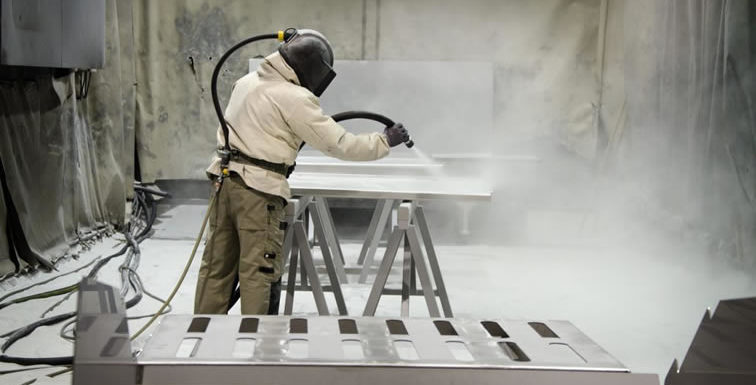
Sandblasting, also called abrasive blasting media, is a process where tiny particles are shot at a surface with high air pressure. These particles hit the surface and remove rust, old paint, dirt, and scale. They can also smooth a rough surface or give it a fresh finish.
It is widely used on metal parts and machinery, where rust and corrosion are a common problem. Over time, moisture and chemicals eat into the metal and weaken it. Sandblasting strips away this damage quickly, leaving a clean surface that is ready for the next step. It is also the best way to prepare a surface before painting or coating, because the slightly rough finish helps the new paint stick much better.
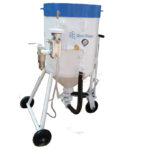
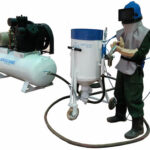
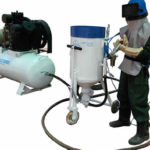
The name “sandblasting” comes from the past, when sand was the only material used. As the metal fabrication industry grew, better materials arrived. Today, the type of material used often decides the type of blasting. A portable sandblasting machines can work with most of them.
How Does the Choice of Material Affect the Result?
Three things matter most: the material you use, the air pressure, and the nozzle size.
- Hard and sharp particles cut fast and remove heavy rust.
- Soft and round particles, such as glass beads or ceramic blasting media, clean gently and leave a smooth finish.
- Higher pressure works faster but can damage thin or soft surfaces.
So the right material depends on what you are cleaning and what finish you want.
Main Types of Blasting Material
Silica sand: This is regular sand. Its particles are fairly even in size and have sharp edges, so it cuts well. But it is now avoided in many countries and workplaces. Silica dust can cause silicosis, a serious lung disease. Better and safer options are available, so we do not recommend silica sand.
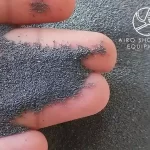
Steel grit: Made of crushed steel, it is very hard and cuts fast. It is great for removing heavy rust and old paint from steel and leaves a clean, rough surface for coating. It can also be reused many times, which saves money.
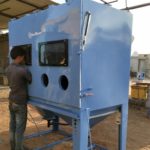
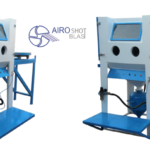
Glass beads: These are tiny round glass balls. They do not cut deeply. Instead, they give a smooth, soft, matte finish. They are ideal for cleaning and polishing, and are often used in a sandblasting cabinet for small parts.
Aluminium oxide: A very hard and sharp material that works on metal, glass, and stone. It is popular for fast cleaning and etching, and it can be reused.
Garnet and copper slag: Both are good for large steel structures, ship hulls, and tanks to copper slag. They cut well and produce less dust than sand, so they are a safer choice for heavy jobs.
Walnut shell and other soft media: These are gentle abrasives. They clean without damaging the surface, so they suit delicate parts and light cleaning.
Soda (baking soda): This is a very soft material. It removes light paint, grease, and dirt without damaging the surface underneath. It suits sensitive materials like aluminium, fibreglass, or delicate engine parts. It is not the best choice for heavy rust.
Bristle blasting (a note): This is a bit different because no abrasive is shot at the surface. Instead, rotating steel wire bristles clean the metal. It is used for light corrosion and spot cleaning.
Where Are These Materials Used?
- Construction and steel structures: Steel grit, aluminium oxide, and garnet for cleaning beams, bridges, and railings.
- Oil, gas, and pipelines: Steel grit and steel shots for pipes and storage tanks.
- Shipbuilding and repair: Copper slag and garnet for ship hulls.
- Automobile restoration: Glass beads, walnut shell, or soda for removing old paint without damaging the panel.
- Fabrication and welding workshops: Aluminium oxide for a clean surface before welding or coating.
- Home and farm use: Silica free abrasive for gates, grills, and farm tools.
Which Material Should You Use?
- Heavy rust on steel: Steel grit, garnet, or copper slag
- Smooth, matte finish: Glass beads
- Removing paint from a car without damage: Glass beads, walnut shell, or soda
- Fast, general cleaning on metal: Aluminium oxide
- Delicate surfaces: Soda or walnut shell
- Budget friendly, large jobs: Copper slag or garnet sand.
- Always check that your machine and nozzle suit the material. A tungsten carbide nozzle lasts longer with hard abrasives.
Important Safety Considerations
- Avoid silica sand: Choose silica free abrasives to protect your lungs.
- Wear a respirator: Even safe abrasives create dust, and old paint dust can contain harmful substances like lead.
- Use full protective gear: a blasting helmet, gloves and apron, safety shoes, and earmuffs.
- Work in a ventilated area: and keep other people away from the blasting zone.
- Inspect equipment: like hoses, couplings, and nozzles before every use.
- Never point the nozzle at anyone.
- Get proper training: before operating the machine.
Final Words
The best “sand” for sandblasting is often not sand at all. Steel grit, aluminium oxide, glass beads, garnet, and other media are safer, cleaner, and more efficient. Choose the material according to your surface, your finish, and your budget, and always follow safety rules.
Looking for the right blasting machine and abrasive for your work? Browse our range of portable sandblasting machines and abrasive media, or contact us today for expert advice and a quote.
