
Car Sandblasting: A Quick and Effective Way to Remove Paint and Rust
Over the years, every car collects its share of damage. Sun fades the paint, moisture creeps under the coating, and small rust spots slowly grow into large patches. Whether you own a vintage classic, a family car or a working truck, there comes a point when hand sanding and chemical strippers are too slow. At Airoshot Blast, a leading manufacturer, supplier and exporter of blasting equipment in Jodhpur, India, we help vehicle owners and workshops bring worn bodywork back to a clean, paint-ready surface. This guide explains what car sandblasting is, how it works, which methods suit which jobs, which abrasive to choose, where it is used, and how to stay safe.
What Is Car Sandblasting?
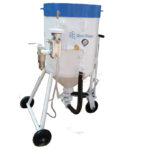
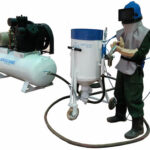
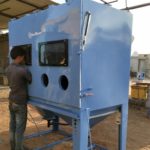
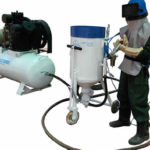
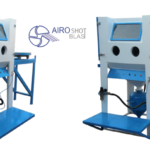
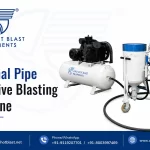
Car sandblasting is a surface preparation process in which abrasive material is propelled at high speed against a vehicle’s body, chassis or parts, using a portable sand blasting machine or a grit blasting machine. The impact strips away old paint, filler, rust and scale, leaving bare, clean metal ready for primer and a fresh coat. A good sand blasting nozzle and the right abrasives give you better control over the finish, while smaller parts can be cleaned in a shot blasting cabinet.Car sandblasting is a surface preparation process in which abrasive material is propelled at high speed against a vehicle’s body, chassis or parts. The impact strips away old paint, filler, rust and scale, leaving bare, clean metal ready for primer and a fresh coat.
It is popular for good reason. Rust spreads quietly under paint, and by the time it shows, the damage underneath is usually much bigger. Removing it early with a portable grit blasting machine or a grit blasting cabinet prevents structural problems and saves you a lot of money on repairs. Blasting also gives a better base for repainting, because new paint bonds far more reliably to properly prepared metal than to a patched, hand-sanded surface. If you are wondering about the next step, our guide on painting after sandblasting explains how to do it right.It is popular for good reason. Rust spreads quietly under paint, and by the time it shows, the damage underneath is usually much bigger. Removing it early prevents structural problems and saves you a lot of money on repairs. Blasting also gives a better base for repainting, because new paint bonds far more reliably to properly prepared metal than to a patched, hand sanded surface.
It works on every kind of vehicle, whatever the make or model: classic cars, sedans, SUVs and trucks, as well as individual components such as wheels, frames, bumpers and axles. Bulk batches of small metal parts can be cleaned quickly in a tumblast shot blasting machine.
How Does Car Blasting Work?
The principle is simple. A sand blasting machine feeds abrasive into a stream of compressed air (or, in some systems, water) and carries it through a nozzle at high velocity. When the particles strike the surface, they chip away coatings and corrosion layer by layer.
A typical car blasting job follows these stages:
- Inspection and masking: The operator checks the condition of the panels, notes dents or thin areas, and protects glass, rubber seals and trim that should not be blasted.
- Choosing the method and media: The abrasive and pressure are selected based on metal thickness and how heavy the rust is.
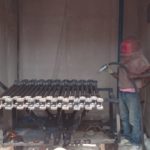
- Blasting: The nozzle is held at a controlled distance and angle and moved steadily across the surface. Constant movement prevents heat build-up and warping. If you want to understand the equipment side, see how a sandblasting machine works.
- Cleaning: All dust and residue are removed, since leftover contamination weakens paint adhesion.
- Immediate protection: Bare steel starts to flash-rust quickly, so primer or a protective coating should be applied soon after blasting. Read more on painting after sandblasting.
Traditional abrasive blasting with sand or metal media is very aggressive. On thin car panels it can leave a rough or slightly distorted surface, and a gloss finish will show every dent. That is why gentler methods exist.
Main Types of Blasting Used on Cars
Conventional sandblasting: Best for heavy rust, thick paint and sturdy parts such as chassis, frames and truck components. It is fast and thorough but needs a skilled hand on body panels.
Dustless blasting. Water is mixed with the abrasive, which reduces dust and cushions the impact. It is gentler on the surface and a good choice for body panels.
Glass bead blasting: Glass beads give a smoother, more refined finish and are kinder to the metal. They suit lighter cleaning, aluminium parts and surfaces that will get a high quality paint finish.
Soda blasting: This uses sodium bicarbonate (baking soda) at much lower pressure than traditional blasting. It removes paint and light rust without harming delicate surfaces, making it ideal for fragile panels and fiberglass.
Shot blasting: Steel shots or grit is used for heavy duty cleaning of thick, rigid metal parts, mostly in industrial settings. It suits chassis components and fabrication work more than car bodies.
If you are unsure which suits your vehicle, our team can inspect it and recommend the least aggressive method that still does the job.
What Abrasive Should Be Used?
The abrasive controls both how well coatings come off and how much the metal is affected.
- Sand or silica based media: Economical and effective on heavy corrosion, but aggressive, and it produces fine dust that needs proper protection and extraction.
- Aluminium oxide and steel grit: Hard, cutting abrasives for tough rust and scale on thick metal. They leave a deeper surface profile, so they are not suited to thin body panels.
- Glass beads: A balanced choice that cleans without cutting deeply, leaving a smooth, satin finish.
- Baking soda: The gentlest option, excellent for paint removal on delicate surfaces where warping is a risk.
- Walnut shell and other soft media: Useful for light cleaning and sensitive components.
As a rule of thumb, use the softest media that will do the job. Thick, rusty metal can take harder abrasives, while thin or classic body panels deserve gentler media and lower pressure.
Where Is Car Blasting Used?
Blasting equipment is used well beyond a single garage job. Common places include:
- Classic and vintage car restoration shops, where original metal must be preserved while decades of old paint and rust are removed. A sandblasting machine handles the bodywork, and a sandblasting cabinet suits smaller parts.
- Automobile body and paint shops, where panels are stripped before repainting. A sandblasting machine or a portable sandblasting machine is commonly used here.
- Truck, bus and commercial vehicle workshops, for chassis, frames and other heavy components. A shot blasting machine is the best choice for heavy duty cleaning.
- Fabrication and engineering units, which clean and prepare parts before coating or welding. These units use shot blasting machines and sandblasting cabinets for preparation, and thermal spray guns, metalizing guns, arc spray guns and zinc spray booths for coating.
- Wheel and component refurbishing, covering rims, axles, suspension parts and engine components. Small parts are cleaned in a sandblasting cabinet or shot blasting machine, and a thermal spray gun or metalizing gun applies a protective coating after refurbishing.
In workshops that handle small parts regularly, a sandblasting cabinet keeps the process enclosed and clean. For larger jobs and industrial cleaning, a shot blasting machine or portable sandblasting machine is the usual choice.
Important Safety Considerations
Blasting is effective, but it must be done carefully.
- Protective gear: Operators should wear a sand blasting helmet with fresh air supply, gloves, a suit and safety footwear. Fine dust from sand and removed paint should never be inhaled.
- Dust control: Work in a ventilated or enclosed area with proper dust extraction, so dust does not spread to people or other work.
- Old paint hazards: Paint on older vehicles can contain harmful substances such as lead, so handle and dispose of debris responsibly.
- Pressure and distance: Too much pressure or a nozzle held too close can warp panels or damage the metal.
- Equipment checks: Hoses, couplings and nozzles should be inspected regularly, since a failure under pressure is dangerous.
- Trained operators: Leave the work to qualified professionals who understand the equipment and the material.
Get Your Car Back on the Road with Airoshot Blast
Untreated rust only gets more expensive, and old paint will never look right until the surface beneath it is properly prepared. Our experienced team handles car blasting with care, so your vehicle returns clean, protected and ready for a new paint job.
Beyond services, Airoshot Blast manufactures sandblasting machines, sandblasting cabinets, shot blasting machines, thermal spray guns, metalizing guns, zinc spray booths and arc spray guns at reasonable prices. If you run a workshop or restoration business and want your own equipment, we can help you choose the right machine.
Ready to restore your car? Contact Airoshot Blast in Jodhpur today for a quote on car blasting services or to enquire about our blasting equipment.
