Sand Blasting Machine in Oman
Oman’s industrial growth, from energy facilities and ports to mining, fabrication and construction, creates steady demand for dependable surface preparation. Humid coastlines, salt-laden air, desert dust and strong heat all speed up corrosion on steel. A sand blasting machine in Oman helps teams clear that damage and prepare metal and concrete so coatings last longer.
This guide explains the machine, its working principle, the main types, typical applications, abrasive choices and safety rules. It is written for engineers, maintenance managers and buyers comparing sand blasting equipment in Oman and looking for the best sand blasting machine in Oman for their needs.
What Is a Sand Blasting Machine?
A sand blasting machine, also written as a sandblasting machine, is industrial equipment designed to clean, strip or texture a surface by projecting abrasive material at high speed. The modern, broader term is abrasive blasting, because today’s operators use many media beyond traditional sand.
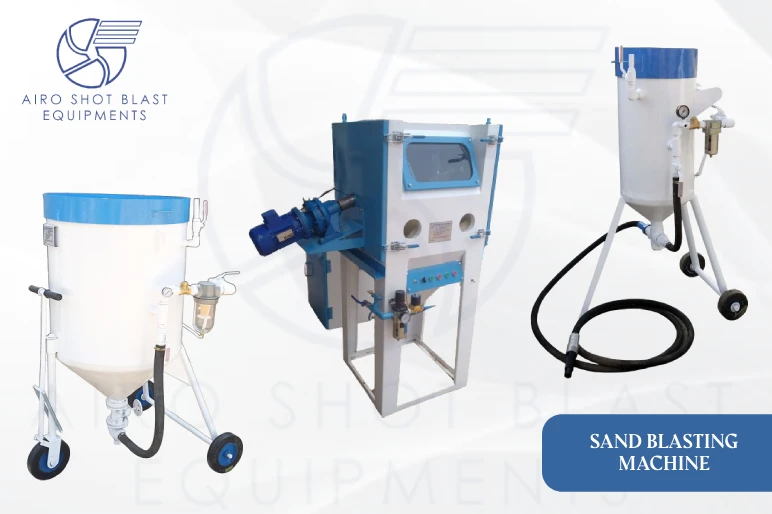
A typical abrasive blasting machine in Oman includes:
-
Blast pot: a pressure vessel that holds the abrasive
-
Air supply: a compressor that provides the driving force
-
Metering valve: controls how much abrasive joins the air stream
-
Blast hose and nozzle: deliver and shape the abrasive jet
-
Safety control: a deadman handle or remote stop
-
Dust control: extraction or containment in enclosed systems
Remember: the abrasive removes the material, while the machine controls speed, volume and accuracy.
How Does a Sand Blasting Machine Work?
The process runs in clear stages:
-
Load the abrasive into the pot or cabinet hopper.
-
Build pressure by feeding compressed air into the vessel.
-
Meter the flow so abrasive enters the airline at a steady rate.
-
Accelerate the mix along the hose toward the nozzle.
-
Blast the surface to lift off rust, coatings, scale or residue.
-
Create the profile that coatings need for strong adhesion.
-
Recover or clear the media. Closed systems filter and reuse abrasive, while open work needs careful clean up.
The result is influenced by air pressure, nozzle size, abrasive type, grain size, working distance and angle. Small adjustments can change a gentle clean into a heavy strip, so trained operators make a real difference.
Main Types of Sand Blasting Machine in Oman
Choosing among the main designs is central to finding the best blasting machine in Oman for your work. The right option depends on the job, not on a single universal answer.
| |
|
| Type |
Best Suited To |
Why Choose It |
| Pressure blasting machine |
Heavy corrosion, large steel structures |
Fast, powerful and consistent |
| Suction (siphon) machine |
Light cleaning, small tasks |
Simple and easy to run |
| Blasting cabinet |
Small and medium parts |
Enclosed, tidy, reusable media |
| Portable blasting machine |
Pipelines, tanks, field work |
Easy to move to the job |
| Blast room |
Large parts, repeat production |
Full containment and recovery |
|
Pressure machines are the usual choice for demanding industrial surface preparation.
Suction machines fit workshops that need a basic, low-maintenance setup.
Cabinets give clean, controlled results for precision components.
Portable machines support crews working directly on assets in the field.
Blast rooms suit operations that blast large or numerous parts every day.
Wet blasting helps when dust, heat or fire risk is a concern.
Where Are Sand Blasting Machines Used in Oman?
Oman’s diverse economy offers many uses for blasting equipment:
-
Oil, gas and petrochemical sites: pipelines, vessels, storage tanks and process structures
-
Ports, shipyards and marine services: hulls, decks, jetties and offshore steel
-
Mining and minerals: crushers, conveyors, hoppers and heavy equipment
-
Construction and infrastructure: bridges, steel frames and concrete preparation
-
Steel fabrication and engineering shops: weld cleaning and pre coating preparation
-
Power, water and desalination plants: pumps, pipework, boilers and cooling systems
-
Vehicle and machinery refurbishment: paint removal and rust treatment
-
Decorative finishing: glass etching, stone texturing and metal detailing
Local factor: coastal humidity and heat make corrosion a constant risk, so proper blasting before coating protects equipment for years.
What Abrasive Should Be Used?
Abrasive choice affects finish quality, speed, reuse and operator safety.
| Abrasive |
Ideal For |
Notes |
| Garnet |
Rust and paint removal on steel |
Low dust and reliable cutting |
| Aluminium oxide |
Hard surfaces, etching, fine finishing |
Sharp, long-lasting and recyclable |
| Steel grit |
Heavy scale, deep anchor profile |
Strong performance in closed systems |
| Steel shot |
Peening and smooth cleaning |
High durability and reuse |
| Glass beads |
Satin and bright finishes |
Gentle on the base material |
| Walnut shell or plastic media |
Delicate surfaces |
Cleans without damage |
Avoid free silica sand. It releases crystalline silica dust that can seriously harm the lungs. Engineered media such as garnet are the safer standard for any industrial sand blasting machine operation.
Selection tips:
-
Match abrasive hardness to the surface condition
-
Use coarse grain for deep profiling and fine grain for finishing
-
Choose recyclable media for cabinets and rooms
-
Follow the profile range in the coating specification
Important Safety Considerations
Blasting demands discipline. Plan safety before starting any job.
Operator protection:
-
Use a supplied-air blast helmet for open blasting
-
Wear protective suits, gloves, boots and hearing protection
-
Keep breathing air clean and properly filtered
Equipment checks:
-
Inspect pots, valves, hoses and nozzles each shift
-
Fit and test a deadman control
-
Secure couplings with safety clips
-
Respect the rated working pressure